Search and AI Changes: September 14-30, 2026
A source-led briefing on September search and AI changes, now including Cloudflare agent payments, Shopify AI checkout, OpenAI hosted browsing, Perplexity Fast Search and Claude retirement.
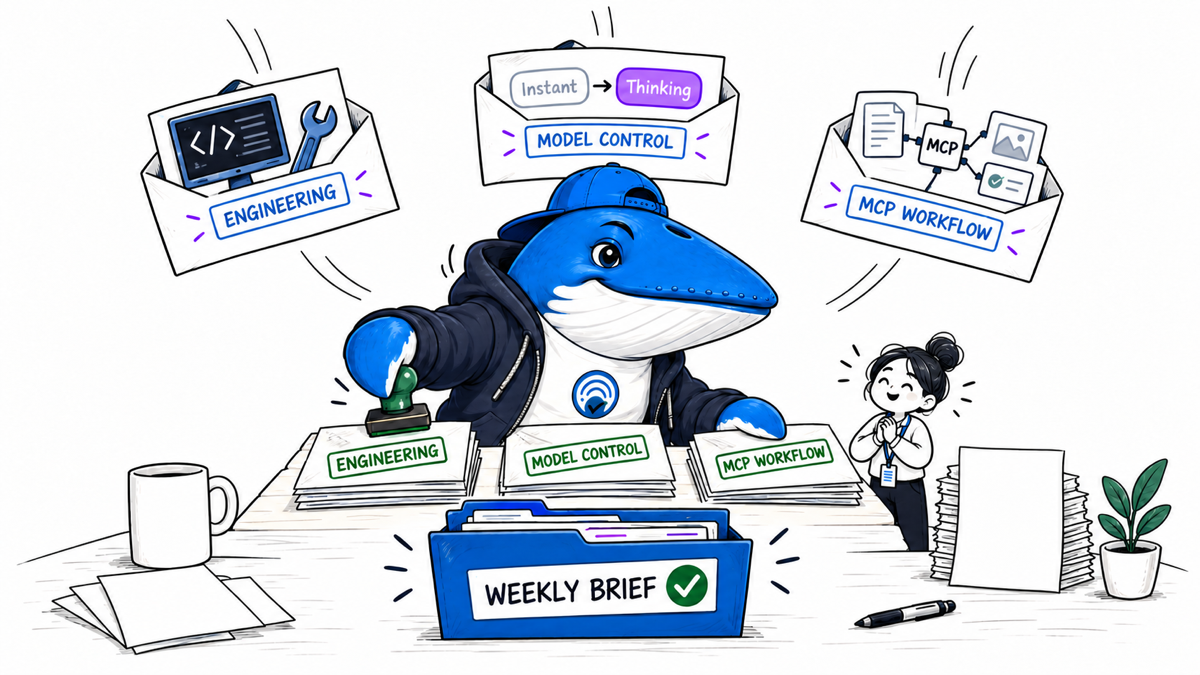
The developments across September 14 through 30 touch different operating layers: internal engineering models, ChatGPT model controls and advertising tools, live voice APIs, agent permissions, MCP credential custody, crawler policy, regional search eligibility, publisher identity, Perplexity effort controls, and Search Central events. None is evidence of a new Google ranking system.
This briefing keeps each claim attached to its primary source and turns the changes into checks an editor, developer, measurement lead, advertiser, or publisher can actually run.
Correction, September 24: We removed an item that wrongly treated Google’s CSS content documentation as a September 2026 change. The official changelog dates it to September 22, 2023. The technical guide now states that chronology explicitly.
Agents can find tools and follow changes. That does not make every result a search citation.
The latest announcements bring two different kinds of discovery into the same conversation: finding a tool to use and finding a source to cite. For publishers and SEO teams, keeping those outcomes separate is more useful than treating every new assistant feature as a visibility boost.
ChatGPT improves plugin discovery, not just web discovery.
OpenAI’s September 29 DevDay recap announces improved plugin-directory ranking and recommendations, discovery inside conversations, and a revised submission flow. Users still choose plugins and approve their access. Plugin extensions can add sidebar homes, interactive panels, and file viewers. These are distribution and interface changes, not an announced change to how ChatGPT cites public webpages.
Consider an SEO reporting product. A directory appearance means a potential user found the product; an authorized tool call means the assistant used it. A citation to the vendor’s blog is a third outcome. Counting all three as one visibility metric would hide whether the product acquired a user, completed a task, or merely supplied a reference. Our plugin migration article now explains how to preserve that distinction.
Dots enable ongoing work, with separate research and action permissions.
OpenAI introduced dots as persistent agents with a cloud computer and connected tools. Availability is limited to Pro and Business Premium in eligible markets; Enterprise, Edu, and Healthcare beta access requires an administrator to enable it. This is a product announcement, not evidence that an agent has improved an SEO campaign.
A useful first assignment would be narrow: watch a named set of permitted sources for a documented policy change, keep the old and new wording, and prepare a private summary. This is an illustrative assignment, not a workflow we have run. It should not include changing robots.txt, editing a client site, or emailing a recommendation unless those actions are separately authorized. The official safety FAQ says proactive research can read permitted information and save private notes. Still, its tools cannot directly send messages, change plugin content, or control a browser or Computer. Authorized tasks have separate action rules. A human should still review consequential recommendations.
GPT-6.1 Sol changes the cost comparison, not the citation verdict
GPT-6.1 Sol’s launch gives teams a new model option in Work, Codex, and the API, but not yet Chat. Our updated Astra analysis works through a token-cost example and separates vendor benchmark results from supported live citations. No matched SearchEngineAnswer model test has been completed.
AI Mode monitoring begins expanding beyond paid subscribers.
Google Search product VP Robby Stein announced on September 28 that AI Mode information monitoring is rolling out globally to all users after earlier availability for Ultra and Pro subscribers. His post points users to the Google app and describes monitoring changing websites, forums, social posts, and real-time sources, with examples such as restaurant openings, restocks, and price changes. A rollout announcement does not mean every account already shows the feature.
For a retailer, the reader question becomes whether the assistant notices a real stock change and provides a usable destination. Record the task wording, product variant, market, time of the visible change, alert time, and destination URL. This is a suggested observation, not a completed test. A page appearing in an alert, a displayed source, and a visit to the merchant are separate outcomes. The announcement does not establish a dedicated Search Console attribution rule for notification traffic or a guaranteed referral increase.
Business Profile policy warns against unfounded repeat complaints.
Google’s current Business Profile third-party policy includes misuse of support channels. Repeated unfounded complaints, including false, misleading, or bad-faith reports, can lead to further complaints being rejected without assessment. The official page does not identify when this wording became effective. It does not say that every repeated legitimate appeal is prohibited, and it is not a local-ranking rule.
The practical distinction is between new evidence and repeated assertion. In an illustrative address dispute, a dated photograph, the disputed field, and a previous case reference make a correction request easier to assess. Resending an unsupported accusation adds no comparable information. Agencies should keep the client’s evidence and case history together rather than promise escalation through submission volume.
Analytics is marked resolved, but the incident dates do not align
The official Google Analytics incident is resolved. Its displayed incident window is September 29, 00:41 to 02:52 UTC, while its investigation and resolution updates are dated September 30, 00:57 to 01:44 UTC. Those dates conflict. The interval between status updates should not be presented as a verified outage duration, and the notice does not establish permanent data loss on a particular property.
For a publisher reviewing a flat chart, distinguish an unavailable report from missing collection and from fewer real visitors. Preserve the report timezone and affected interval, then compare independent server requests and Search Console clicks for that interval. Agreement between two traffic sources strengthens the observation of a decline; it still does not identify an algorithmic cause. The updated spam-rollout article explains that diagnostic split.
The briefing board
| Change | Verified scope | Do not infer | Next check |
|---|---|---|---|
| Perplexity uses Astra internally | Communications, software changes, production monitoring, and end-to-end tests | That Astra serves consumer Perplexity answers | Keep engineering model and answer model as separate fields |
| ChatGPT changes automatic switching | Plus and Pro stop automatically moving Instant to Thinking, except for safety | That one model will now answer every difficult prompt | Save the selected model and reasoning control |
| Microsoft Curate adds MCP-backed access | Natural-language access to account-specific reporting, deals, history, performance, and troubleshooting | That vendor performance claims apply to every publisher | Audit permissions, returned fields, and generated report provenance |
Perplexity uses Astra for engineering, not a disclosed consumer answer model
OpenAI’s Perplexity customer story says the company uses GPT-6 Astra to write communications, change software, monitor production systems, and build end-to-end tests. The story also connects stronger code generation with programs that search web or internal information and summarize it.
The source does not say Astra is the model serving Perplexity’s consumer answers. It publishes no citation-quality rate, latency comparison, referral effect, or publisher-visibility result. That distinction matters when a benchmark or product observation is attributed to a model name.
Operational check: add separate fields for engineering model, retrieval system, response model, product surface, and observation date. Populate only fields the source or interface actually exposes.
ChatGPT Plus and Pro stop one kind of automatic model switching
OpenAI’s September 14 ChatGPT release note says automatic switching from Instant to Thinking is being retired globally for Plus and Pro. Users can still select an available option in the model picker, and ChatGPT can still switch automatically for safety.
A repeatability test that previously assumed difficult prompts would route to Thinking now has a changed control. Historical and current runs should record the visible selection rather than treating “ChatGPT” as one fixed instrument.
Do not repair the series by guessing. If the earlier model route was not captured, mark it unknown. A guessed label can make a clean chart and a false comparison.
Microsoft Curate brings account data into an MCP-backed Copilot workflow
Microsoft Advertising says Copilot in Microsoft Curate can use MCP-backed capabilities to answer natural-language questions about account-specific reporting, deals, performance, change history, and troubleshooting. A related July release roundup describes the feature as open beta for Monetize and Curate.
For publishers, the useful question is not whether MCP is present. It is whether the generated answer preserves the account, date range, filters, currency, deal identifier, source fields, and link back to the underlying report. A fluent answer without those controls can accelerate the wrong diagnosis.
- Start with a read-only account and a known report.
- Ask a question whose correct result has already been exported.
- Compare totals, filters, dates, and row exclusions.
- Check whether the answer cites or links the underlying account view.
- Separate beta feature behavior from Microsoft’s cited vendor performance examples.
September 15 change log
The next five developments belong in one operating brief because none has earned a separate SearchEngineAnswer guide without a test, dataset, or reusable tool. The value is in identifying what changed, the control it affects, and what a publisher should record next.
Gemini 3.8 Live needs a state-aware voice test
Google made Gemini 3.8 Live and Gemini 3.8 Live Extended Thinking generally available for audio-to-audio applications. The standard model targets low-latency dialogue and includes asynchronous function calling. The Extended Thinking model supports background reasoning while live audio continues.
A voice-search test must not treat turnComplete: true as proof that the model is idle. Google’s Extended Thinking documentation says the client should keep listening and use interaction_status to understand whether work continues. A premature disconnect can erase a later tool result and make citation or answer-completeness measurements wrong.
- Record the exact model ID, session configuration, voice activity settings, tool calls, interaction status, and final audio completion.
- Use a fixed set of current-information prompts with known primary sources.
- Score spoken claim coverage and source grounding separately.
- Retain interruptions, timeouts, empty turns, and late tool completions in the denominator.
SearchEngineAnswer has not run that test yet, so this report makes no claim about citation quality, latency, or success rate.
Claude’s auto permission needs an event ledger
Anthropic’s Claude Platform release notes say Managed Agents permission policies now include auto. The server can run, deny, or pause an agent or MCP tool call for approval. Tool events report an evaluation field and evaluated_permission.
That makes the permission decision observable, but not automatically safe. Preserve tool name, requested action, evaluation, evaluated permission, final outcome, approval actor, and affected resource. A summary that records only successful tools hides denied and paused calls, which are often the most useful control evidence.
Perplexity connectors change credential custody
Perplexity’s September API changelog adds custom remote MCP connectors. A project registers a remote server once, Perplexity stores the server credential, and Agent API requests reference a connector ID. The remote Perplexity MCP server also supports OAuth sign-in, including organization selection for billing, while API keys remain available for clients without OAuth.
The test is operational, not editorial: connect a read-only server, verify the selected organization, revoke access, reconnect, and confirm which audit trail records the change. Do not put a connector credential into prompts, screenshots, or an article worksheet.
Cloudflare mixed-use controls can touch search
Cloudflare’s September 15 production change means Block and Block on pages with ads can apply to mixed-use crawlers including Googlebot, Bingbot, and Applebot. Publishers who want search crawling while declining training should inspect Disallow AI Training and the migrated settings. The full legacy-to-current matrix is in our updated Cloudflare AI bot controls audit.
Search Central event notices are calendar items
Google announced upcoming Search Central Live events in Bogotá and Ciudad de México and Search Central Live India in Bengaluru. These are useful community and learning opportunities. They are not evidence of an algorithm update, ranking change, or product launch.
September 16 to 19 change log
These late-week changes affect campaign operations, advertising crawl controls, regional result eligibility, publisher identity, and the cost-depth tradeoff in Perplexity Computer. Each one deserves a scoped check. None provides a new ranking or citation benchmark.
ChatGPT Ads adds commerce and CRM operations
OpenAI’s September 16 product announcement adds Sponsored Agents for select US advertisers, an Ads Manager plugin in ChatGPT Work, AI creative assistance, optional contextual text adaptation and translation, HubSpot as its first CRM partner, and Shopify as its first ecommerce partner.
The important boundary is that a Sponsored Agent starts after an ad click and remains separate from ChatGPT’s independent answer and the user’s original conversation. For implementation checks, separate impression, click, agent start, site visit, lead or order, and validated business outcome. The updated ChatGPT Ads audit includes the full acceptance test.
Mediapartners-Google ignores the global robots group
Google’s September 17 documentation change clarifies that Mediapartners-Google affects multiple ad-related products, including AdSense and Google Ad Manager. Google’s special-case crawler documentation says the global User-agent: * group is ignored, so path-specific control requires an explicit Mediapartners-Google group.
This is an advertising-crawler control, not evidence about Google Search indexing or an AdSense quality review. The updated crawler guide includes the rule example and a dated field check from this site.
Perplexity Computer effort controls select a coordinator
Perplexity’s September 17 announcement adds Light, Standard, High, and Ultra effort settings to Computer on the web. The setting chooses the model coordinating the assignment and how deeply it reasons. Supporting agents can still use models from different providers.
That means the visible effort label is not a complete model inventory. A repeatable test should record the effort setting, any exposed coordinator model, custom controls, credits used, elapsed time, final sources, and task outcome. SearchEngineAnswer has not run the planned 240-answer comparison, so this briefing makes no claim that a higher effort level improves citation quality.
Google adds local-business queries to two EEA units
Google’s September 18 Search documentation update adds local-business queries to the EEA aggregator and supplier units. An eligible vertical search service or directory belongs on the aggregator side. A brick-and-mortar business or service provider that performs the work belongs on the supplier side, which appears only when an aggregator unit appears.
This is a documented eligibility expansion, not a general local-ranking update. The revised regional Search feature matrix now includes the provider split, a home-services example and an updated downloadable CSV.
Google Search Profiles adds multi-brand management and richer article cards
Google’s September 16 product update lets one login manage Search Profiles for multiple publication brands, optimizes article thumbnails, allows longer headlines and lowers United States eligibility to at least 10,000 followers on YouTube, Instagram, X or TikTok.
The profile follow action remains different from a Preferred Sources selection. The updated Preferred Sources guide adds a multi-brand governance checklist and separates profile follows, preference-button opens and Search performance.
Google’s commerce release needs three separate denominators
Google’s September 16 shopping update makes Merchant Center AI performance insights generally available in Australia, Canada, India, New Zealand and the United States. It also describes a United States beta for Business Agent in YouTube ads and a gradual United States rollout for Universal Commerce Protocol shopping flows, with Australia and Canada planned for early 2027.
These releases should not be combined into one AI-commerce score. Merchant Center reports organic AI visibility. Business Agent begins after an ad interaction. UCP covers cart transfer or checkout. The updated Merchant Center analysis now documents the share-of-voice denominator and a controlled test for Google’s optional conversational product attributes.
A court filing reports sharply lower publisher CTR in Copilot
A September 17 plaintiffs’ brief attributes Microsoft representative data showing 51% to 94% lower publisher click-through rates in Copilot than in traditional Bing Web Search across three publisher groups. The public filing does not expose sample sizes, query mix, test dates or raw rows, and the figures are not a court finding.
The new Copilot publisher CTR analysis translates the relative reductions into a worked click example and gives publishers a four-denominator audit.
A 960-answer study separates source breadth from repeat stability
Prefer ran 80 questions three times across four APIs. It reports 1,329 cited sites, with 72.7% appearing in only one engine, while 23 of the top 25 sites appeared across three or four engines. Repeat-run source overlap ranged from 35% for Gemini to 96% for Perplexity.
The sample is US-English, API-based and weighted toward AI-search topics. Prefer sells AI tracking, and the public download is aggregate rather than answer-level. We used the study to update the noise-floor, long-tail and interface-drift guides instead of turning it into a universal benchmark.
Google result collection problems can imitate volatility
SISTRIX reported slower data collection, and a Nozzle representative said retrievable Google data had fallen by about 80% during a September 18 disruption. That is a measurement-system incident, not proof of a ranking update. The revised volatility guide now starts with collector health and cross-checks against first-party impressions.
A reported local panel test needs wider confirmation
Search Engine Watch documented two observers seeing AI-generated text in local Knowledge Panels. Google has not announced the feature, and SearchEngineAnswer has not reproduced it across a defined query panel. Treat it as a reported interface test, not a rollout or local-ranking change.
X Search pricing changes are scheduled for September 21
X’s documentation lists $5 per 1,000 posts fetched and $10 per 1,000 profiles fetched beginning September 21 at 12:00 p.m. Pacific Time. As of this September 20 update, that is a future-dated schedule rather than an observed billing record. The cost guide now includes a first-invoice reconciliation check.
A 171,264-conversation study maps where AI-search visibility is lost
A September 16 preprint analyzes 171,264 donated conversations and replays 1,000 prompts across GPT-5.3-chat, Claude Sonnet 4.6, Grok-4.3 and DeepSeek-v4-flash. In the controlled replay, the systems searched for 140, 825, 766 and 584 prompts respectively. The result is not a permanent model league table. It is evidence that search invocation, query writing, retrieval and visible citation selection are separate measurement layers.
Our four-platform web-search analysis turns that lifecycle into a downloadable row-level audit and documents the study’s opt-in, English-heavy and API-versus-product limits.
Algebraic Retrieval passed its portable 38-test suite
The Algebraic Retrieval preprint proposes typed operations for masks, weights, scores and top-k selection. SearchEngineAnswer ran the linked repository suite in an independent checkout. All 38 tests passed after the external flex dependency was placed on the Python path, and the checked-in Vaswani receipt matched its documented SHA-256 hash.
We did not rebuild the full 11,429-document Java fixture. The independent test note distinguishes the code we executed from the larger parity result reported by the authors.
A 67,200-response audit treats language as an experimental condition
A September 17 preprint tested 20 Ukraine-war statements across 112 language or script conditions, three model families and ten repetitions. All pooled language conditions leaned toward Ukraine, but the strength varied, and country-linked results correlated with several external geopolitical measures.
The study cannot isolate whether training data, translation, tokenization or alignment caused the variation. Our multilingual AI-answer audit preserves that boundary and provides an equivalence worksheet for teams that publish or monitor answers across languages.
Generative ad retrieval separates relevance, CTR and revenue
Meituan’s UniPolicy preprint describes separate policy paths for relevance, predicted click-through rate and commercial value inside one generative retrieval system. The authors report a seven-day online test with a 0.71% CTR lift, 1.58% revenue-per-search lift, 1.32% ad-revenue lift and 2.5% higher P99 latency.
The public paper omits traffic allocation, absolute event counts, geography, baselines and confidence intervals. The objective-allocation analysis therefore treats the numbers as reported results and focuses on the governance problem created when three policies compete for one candidate budget.
Research watch: citation failures split into four layers
Four September papers now make it possible to separate weak retrieval confidence, missing-page exposure, broken source re-attribution and final validation. SearchEngineAnswer reproduced PageRecall’s public tier-0 checks and published a four-layer AI citation audit with a downloadable ledger.
A fifth paper, Self-Indexing Evidence for Citation Grounding, is worth watching because it proposes document-internal evidence indexes. Its public repository still labels the implementation work in progress, so this edition records it as a research lead rather than a deployable method.
September 21 to 22: source controls moved closer to the answer
Five late changes affect what an AI answer can draw from, how the source should be identified and what measurement claim is defensible. The changes belong in this briefing rather than five thin announcement pages.
ChatGPT Finances adds a separate Experian source layer
OpenAI’s Finances documentation says eligible United States Plus and Pro users can connect an Experian credit report on web, iOS and Android. The product displays a VantageScore 3.0 based on that report. The score and report update monthly, and eligible monitoring alerts can cover new inquiries, accounts and addresses.
Experian is separate from the Plaid connection used for bank and transaction data. That creates at least four evidence classes inside one answer surface: Plaid account data, Experian credit-report data, user-supplied financial memories and public or premium information. A useful capture should record which class answered the question, its report or sync date and the citation ChatGPT exposes.
The report is not live bank activity, a lender can use a different bureau or scoring model, and ChatGPT cannot change or dispute the report. OpenAI also says the product is not a fiduciary or financial adviser. SearchEngineAnswer has not tested an eligible account, so this edition documents the source contract without making a reliability claim.
ChatGPT puts privacy controls into one signed-in center
OpenAI’s September 21 release note introduces a Privacy Center for signed-in Free, Go, Plus and Pro users. It links privacy settings and resources from ChatGPT settings. Availability and the controls shown can vary by plan, region and workspace.
For a research capture, record the account type, country, workspace state and exact control observed. A screenshot from one personal account does not establish an organization-wide default.
Perplexity Agent API adds two coordinator options
Perplexity’s API changelog adds support for Gemini 3.8 Flash and GLM 5.3 Flash in the Agent API. This expands the models available to agent developers. It does not establish that either model powers consumer Perplexity Search, changes source selection or improves citation quality.
A controlled comparison should hold the prompt, tools, retrieval settings and output contract constant, then record model ID, search activation, retrieved sources, cited sources, latency and cost. Model availability is the condition for a test, not the result.
TikTok says it is testing account-level AI spam detection
TikTok’s September 15 disclosure says the platform has labeled more than three billion AI-generated videos and is testing systems aimed at accounts dedicated to AI-generated spam. TikTok also says it is joining the C2PA Steering Committee.
The three-billion total and detection work are company statements, not an independent accuracy audit. The next useful evidence would expose sample composition, false positives, false negatives, appeal outcomes and the difference between a content label and an account-level enforcement action.
Google reported no Search incident on September 22
Google’s Search Status Dashboard showed no confirmed incident when checked on September 22. That does not prove rankings were static or every collector was healthy. It means volatility chatter should not be labeled a confirmed Google update without a status notice, documented product change or controlled property evidence.
Three community reports remain questions, not findings
- An r/aeo discussion asks whether ChatGPT is using more
site:query fan-out. It supplies no raw trace set or denominator. Our existing search-call syntax article remains the canonical record until a frozen prompt test produces dated traces. - An r/TechSEO account reports an indexing improvement after faceted-navigation changes. Without crawl logs, URL counts and Search Console exports, it is a lead for a consenting-property experiment rather than a case study.
- An AI visibility tool discussion reinforces the need to separate mention, recommendation, owned citation, third-party citation, referral and conversion. It does not provide a vendor-neutral benchmark.
The publication rule is simple: community discussion can identify a question. A standalone SearchEngineAnswer article needs primary evidence, a reproducible observation or a clearly bounded test.
What I would change in a search and AI test log
- Add the visible model selection and reasoning control to every ChatGPT capture.
- Separate a vendor’s internal engineering model from the model observed in its consumer product.
- For account-grounded assistants, preserve permissions, query text, filters, generated answer, and underlying report.
- For regional features, record the searcher’s country, query family, aggregator or supplier role, and observed unit separately.
- For publisher identity tools, keep profile follows separate from Preferred Sources opens and Search impressions.
- Do not backfill an unknown historical model label.
- Do not turn customer stories or vendor efficiency claims into search-performance benchmarks.
The common theme is provenance. A product name describes where an observation happened. It does not automatically identify the model, data path, or decision that produced the answer.
September 23: four changes worth separating
Today’s additions fall into four different layers: model economics, release infrastructure, agent training and retrieval quality. Treating them as one “AI search update” would hide what each one can actually change.
GPT-6 caching changes the cost of repeated audits
OpenAI now documents cached-input discounts of up to 90%, a 30-minute eligible reuse window, a Prompt Caching Dashboard, explicit breakpoints and prewarming for GPT-6. The useful SEO angle is repeated evaluation. A stable rubric and tool schema can be reused across many queries while dynamic answer captures stay at the end. Read our prompt-caching cost and implementation guide.
OpenAI also introduced GPT-6 Sol and Luna. Sol is positioned as the general workhorse at $2 per million input tokens and $10 per million output tokens. Luna is priced at $0.10 and $0.50 respectively. Those prices can change model-routing decisions, but they do not replace quality validation on your own citation and source-selection tasks.
Cloudflare turns branch previews into a usable SEO gate
Worker Previews provide stable branch URLs, isolated resources, branch observability and Browser Run support. That makes it possible to validate canonical, robots, redirects, rendered content and schema before a Worker reaches production. Service bindings remain a caveat because a Preview can still call a bound Worker’s production deployment. Our SEO release-gate workflow includes the checks and limitations.
Perplexity reduced tool failures, not overall dissatisfaction
Perplexity reports that a later trained checkpoint reduced online tool failures from 2.24% to 1.77% relative to an earlier checkpoint, a 21.2% reduction. User dissatisfaction moved only from 2.58% to 2.54% and was not statistically significant. The experiment supports learning from selected correction traces, but not a broad claim that users liked the agent more. See our experiment interpretation.
AuthGR links authority-aware retrieval to ranking and clicks
An ACL 2026 industry paper from NAVER and Sungkyunkwan University researchers describes a multimodal authority-aware generative retrieval system trained on millions of pairs. The reported online treatment increased total clicks by 22.07% and top-one CTR by 22.83% while also improving offline and human judgments. The system is private and Korean, so it is evidence for the architecture, not a universal authority score. Our AuthGR analysis separates the metrics from publisher implications.
Watch item: Yoast’s agent abilities are future-dated
Yoast’s public changelog lists version 28.6 for September 29, 2026, with abilities for agents to get and update SEO post data. As of September 23, that date is still in the future. We are recording it as a watch item, not reporting it as a completed release. The distinction prevents a changelog preview from becoming false present-tense news.
September 23: policy, rendering, security and paid-search decisions
UK search choice could include AI assistants
The CMA proposed a UK search-choice requirement that would not exclude AI assistants if they function as general search services and satisfy the final eligibility rules. Generative summaries would need clear, accurate source attribution and direct source access. The consultation remains open until October 9, so no named assistant is approved or confirmed for a choice screen. Our CMA search-choice analysis separates the possible route from a completed rollout.
WordPress 7.1.2 patches a critical template-resolution flaw
WordPress 7.1.2 fixes CVE-2026-87902, a page-template issue that can produce unauthenticated local file inclusion under specific theme and server conditions. WordPress recommends updating immediately, and supported older branches received backports. Our patch and verification checklist keeps exploit detail out while preserving the exposure and incident-response boundaries.
Google Ads expands AI Max language support and previews joined reporting
Google says the AI Brief closed beta for Search campaigns is expanding to Dutch, French, German, Italian, Japanese, Portuguese and Spanish. The company also previewed a report that will join the search term, creative shown and landing page in one view, with additional availability details planned later in 2026.
This belongs in the paid-search layer. It does not measure organic rankings, AI Overview citations or referral traffic from answer engines. The useful action is to preserve those three ad-side dimensions together when testing AI Max: what the person searched, what message Google assembled and where the click landed. Read the Google Ads announcement for the product scope and rollout language.
September 24: source choice, reporting units and Gemini integrations
Product-advice answers show low cross-engine source overlap
A September 16 research preprint tested 117 physical-product questions across ChatGPT, Gemini, their APIs and Google AI Overviews. In matched ChatGPT–Gemini consumer-interface checks, 76.7% had no displayed source domain in common. The study is not a market-share or referral-traffic estimate. Its immediate lesson is methodological: repeat prompts and label the interface before treating a product citation as a stable visibility metric. Our product-answer source audit examines the design, caveats and a small publisher test.
Comscore reports a changing mix of AI prompts and search features
Comscore’s Q2 2026 release says its measured prompt-volume share moved from 70% to 50% for ChatGPT, 17% to 30% for Gemini and 2% to 11% for Claude from January to June. It also says Google desktop searches containing AI Overviews rose from 25.8% in July 2025 to 39.4% in June 2026. Prompt share and search-feature presence have different denominators; neither tells a publisher how many citations, clicks or sales it earned. The revised AI visibility reporting guide shows how to keep those units separate.
Gemini begins adding connected work and creative apps
Google announced on September 23 that Gemini is beginning to roll out connections to services including Airtable, Linear, monday.com, PandaDoc, Zoho, Adobe, Webflow and Squarespace, with additional integrations on its list. Users can connect supported apps in Gemini settings or invoke them in a chat. This changes an assistant workflow, not Google Search indexing or AI Overview citation eligibility. Publishers should verify a specific integration and account permission before making claims about what Gemini can retrieve or edit.
Clarity groups bot requests by page type
Microsoft announced Page Classification for Clarity Bot Activity on September 22. It combines content and URL rules to group requests, and custom path rules override automatic labels. That can help separate article crawls from archive, tool and non-content traffic. The announcement supplies no citation or traffic outcome data. Audit the category assignments and compare the request sample with verified server logs before using the totals to make an editorial decision. The AI crawler guide now includes a page-type measurement check.
A controlled replay separates citation credit from first-citation incidence
The CITECHOICE citation analysis finds that restructuring already-retrieved source text increased target citation markers by an estimated 0.50 per answer. The primary yes-or-no result, whether the target received any citation, was inconclusive. This was a frozen-transcript experiment, not evidence that reformatting a live page changes indexing or source retrieval. Track both outcomes separately when reviewing AI-visibility reports.
September 25: measurement and markup, with one paid-commerce boundary
Google’s latest Search Console and structured-data notices change what publishers can inspect or describe. A separate Google Ads release changes paid discovery flows. Those are different operating layers, and none is a confirmed ranking boost.
Search Console separates image-involved web searches
Google is rolling out a Web: multimodal search-type filter in Search results Performance and the Generative AI performance report. The first can show web clicks and impressions for searches involving an image; the second shows impressions for supported AI features. The multimodal query dimension is unavailable. Our multimodal reporting analysis separates those measurements from Image search and explains how to make a clean, date-matched export. This is a reporting expansion, not proof of more traffic or a new ranking factor. Sources: Google’s announcement and query-dimension documentation.
VideoObject documentation now spells out creator and interaction types
Google’s September 24 documentation changelog added creator, notes support for author, and clarifies the interaction types supported by interactionStatistic. The VideoObject guide lists WatchAction, LikeAction, CommentAction and ShareAction. These are recommended or conditional details, not newly required fields or a new video rich-result format. A video publisher should check one real page’s visible creator identity and real interaction counts against its markup, then use the Rich Results Test. Do not invent counts or add four empty counters because the examples list four types.
The September spam rollout still has no completion notice
Google’s Search Status Dashboard still records only the September 24 start, global and all-language scope, and an estimate of up to two weeks. The existing spam-update story remains the canonical article. A one-day Search Console movement cannot yet be assigned to the update without a controlled comparison and the final rollout window.
Demand Gen changes paid clicks, not organic search reporting
Google’s September Demand Gen Drop combines Business Agent for YouTube ads, one-click image-ad landing-page visits on Shorts and Gmail, and Affiliate Location Extensions in Maps. The Business Agent point overlaps our earlier AI-commerce coverage; the new check is the paid-ad-to-landing-page path, measured separately from organic discovery. Google’s cited 40% increase in Gmail image-creative conversions at the same ROI is internal global data from February 2026, not a general prediction for an advertiser or an SEO result. We have not run an ad-account test, so this remains a bounded roundup item rather than a stand-alone guide.
September 26: retrieval, source links and paid video controls
Three new sources affect different parts of the search workflow. Perplexity describes a faster candidate retrieval stage; an AI Mode measurement study reports fewer displayed links; Google Ads exposes additional Performance Max campaign controls. None establishes an organic ranking boost.
Perplexity rebuilds retrieval and ranking with Photon
Perplexity reports an internal p99 retrieval-and-ranking drop from roughly 800 to 65 milliseconds and a Search API fast preset at 160 milliseconds median for one search call. These are company measurements, not publisher citation rates. Our Photon analysis maps the selection stage to the later answer and citation stages.
Evertune finds fewer displayed AI Mode sources
In roughly 180,000 sampled AI Mode responses, Evertune reports a sharp fall in displayed citation URLs from August 11 to September 3. Many surviving links used Google’s /goto wrapper. The sample does not establish a cause or matching traffic loss. We added a surface-specific measurement note to the Google redirect explainer.
Google Ads API v25.2 adds Performance Max video-source controls
Google’s September 23 v25.2 release notes add asset-group tracking templates, custom parameters and final URL suffixes. They also add AutomatedVideoCrawlSetting for Performance Max, with an enabled choice for a landing-page, social or YouTube source URL. The current implementation guide says the campaign must opt in and that the advertiser confirms rights to the videos. A practitioner should audit approved URLs and rights before enabling the setting, then test paid-ad assets and landing-page attribution. This is ad asset discovery, not Googlebot indexing or an SEO crawler directive.
A related AI visibility report update now demonstrates why a distinct-domain field cannot be divided by answer runs and called citations per answer.
September 27: referral denominators and ad access
BrightEdge reports ChatGPT at 95.1% of its measured AI referrals in August, while its wider Search Dominance Index puts AI at 1.9% of all search referrals. Those percentages use different denominators. The revised AI visibility reporting guide shows the arithmetic on a clearly hypothetical site and explains why the vendor’s July analytics reclassification matters to trend lines.
OpenAI’s current Ads Manager availability list includes self-serve access in Morocco and several Asian markets beyond the earlier Europe announcement. Availability for a billing entity does not guarantee international campaign delivery: some new accounts first need verification and actual home-country spend. The updated ChatGPT Ads audit separates account access, target-country eligibility and product-feed location limits.
Google’s September spam update remains active as checked September 27. There is no completion notice or new confirmed cause to add to the existing rollout article.
September 28: one research boundary, two measurement signals and a Bing interface test
Google’s SAFE paper is not a disclosed Search ranking system
The Google Research paper describes multi-agent forensics of suspicious synthetic-video channel clusters. Its evaluation section proposes metrics but reports no measured accuracy, recall or time-saving figures. Nothing in the paper or the still-active September Search spam incident connects SAFE to Search ranking. Our source audit maps the missing link instead of assuming it.
One ChatGPT panel named fewer brands while citing more sources
BrightEdge’s fixed US B2B Tech panel reports brands named per answer falling from 5.36 to 3.87 between March 15 and September 13. In informational prompts, sources cited per answer rose from 2.30 to 3.12 while named brands fell. The public report gives no prompt count or raw answer set, so this is a vendor-panel observation, not a universal ChatGPT trend. The updated AI visibility reporting guide shows the two units and the missing denominator.
PR Newswire adds an AI visibility report to its APAC distribution product
PR Newswire announced September 28 that its Amplify product includes a Trajaan-powered AEO & GEO Brand Report. It groups brand mentions, source domains and URLs, and example answers. This is a vendor announcement about an APAC product, not an independently tested lift in AI answers from paid distribution. The seller provides both the visibility report and amplification service, so a buyer should request the prompt panel, model and market list, repetition schedule, export, URL-resolution rule and a control design before attributing any movement to a campaign. The IAB’s measurement framework is useful context for separating presence from persuasion, but it does not validate this product.
Bing and Edge show an observed AI Mode label test
Search Engine Watch documented an AI MODE tab in Bing and an Edge address-bar entry point leading toward Copilot Search. Microsoft’s current product page still calls the experience Copilot Search. We have not independently reproduced the UI, and Microsoft has not announced a rename, full rollout, or publisher citation change. If the label appears in your environment, save the date, country, account state, browser version and destination before comparing it with existing Copilot Search traffic.
Research watch: crawler choices, page returns and AI-assisted shopping
A new paper tests publisher AI crawler opt-outs against traffic rankings
A working paper posted September 26 examines news sites that disallowed OpenAI’s training crawler, GPTBot, or its search crawler, OAI-SearchBot. Its public abstract describes daily robots.txt snapshots covering 492 and 825 sites respectively. The author reports no detectable average traffic-ranking effect from the training opt-out and a 4.3% worsening in traffic rankings after the search opt-out. That last figure is not a measured 4.3% drop in visits, ChatGPT referrals or Google rankings.
The abstract does not provide enough detail to audit the traffic-rank provider, pre-trends or subgroup estimates, and we could not inspect the full paper at this check. Publishers should not change a bot policy from this figure alone. Our publisher-controls guide explains what each crawler setting is meant to govern; a decision about access still needs a dated robots file, verified requests and the outcome the publisher actually wants.
Chrome’s scheduled unload milestone calls for a lifecycle check
Chrome’s deprecation guide schedules Chrome 154 for September 22, 2026, with the default change intended to cover 100% of page loads. The guide cautions that dates and versions can change; the schedule alone does not verify a completed rollout. A desktop unload listener can prevent back/forward-cache use, while code that depends on the event firing can miss end-of-session work as Chrome changes the default.
Check one affected template in Chrome DevTools’ back/forward-cache audit, record the browser version, and test a back navigation with pageshow.persisted before moving analytics or cleanup code to the appropriate visibilitychange or pagehide event. This is a page-lifecycle and measurement check, not an announced SEO ranking change. Publishers using ad refreshes should keep it separate from the Google Publisher Tag bfcache-return test, which has its own trigger and evidence requirements.
A commerce experiment asks whether fewer clicks can coexist with more purchases
A Marketing Science Institute listing dated September 18 describes a field experiment involving more than six million customers on Meituan, a Chinese commerce platform. The authors’ public abstract reports increased purchases, more effective and diverse follow-up queries, and less exploratory browsing and clicking with generative search. It does not give a purchase-lift size in the abstract.
The experiment is a reason to measure purchases and choice quality alongside clicks inside commerce journeys. It cannot be transferred directly to Google AI Mode, ChatGPT, an independent publisher’s referrals or every retail category. The paper was first posted in 2025 and revised in May 2026; the MSI listing is new, but the research is not a new product launch. A fuller analysis needs the study’s treatment design, effect sizes and merchant-level results, not just the abstract.
September 30: agent payments, AI checkout and API deadlines
Cloudflare opens a request-level agent paywall
Cloudflare’s closed Monetization Gateway beta lets eligible United States sellers put HTTP 402 pricing rules in front of websites, APIs, MCP tools and datasets. Our publisher analysis explains why per-request pricing fits live data better than reusable editorial content and provides a release gate for paid agent access.
Shopify documents the gaps in Google’s AI checkout
Shopify says Google Analytics and custom pixels do not fire when an eligible shopper completes checkout inside Google AI Mode or Gemini. The merchant audit maps checkout blocks, unsupported products, server-side measurement, and the difference between catalog discovery, direct checkout, and crawler access.
OpenAI adds a hosted browser to the Agents API.
Computer use can now run in an OpenAI-hosted browser, with the application responsible for website approvals and sign-in. We updated the publisher monitoring guide with a controlled log plan and a clear boundary: an interactive browser is not automatically a crawler or indexer.
Perplexity introduces a lower-priced Fast Search mode
Fast Search costs $1 per 1,000 invocations versus $2.50 for standard web search, and Perplexity claims an approximately 800 millisecond latency improvement. The updated Photon analysis turns those claims into a paired benchmark plan rather than assuming equivalent retrieval quality.
Anthropic schedules Sonnet 4.5 retirement
claude-sonnet-4-5-20250929 is deprecated and scheduled to retire on November 30, 2026. The revised Claude migration guide adds an inventory, regression, canary, and removal calendar for moving to a supported model.
Search Central Live begins, but the agenda is not a finding
Google’s Search Central Live Deep Dive Europe runs from September 30 through October 2. Its agenda covers crawling, indexing, canonicalization, internationalization, ranking, and AI search features. We are holding coverage until Google publishes slides, recordings, or attributable technical clarifications.
Keep learning
Continue this topic
Next in this topic
What Perplexity’s CobbleDB Reveals About AI Search Retrieval
Earlier in this topic
AI SEO: What It Is, How It Works, and What to Measure
AEO & AI Search
Ask a question or join the discussion