Browse the publication
From this desk
Start with the most useful page
The featured page offers a strong introduction. The remaining cards help readers move through this editorial section without turning the archive into a service menu.
Read the featured method
Compare page representations without changing the task
Use a preregistered protocol to compare accessibility trees, HTML, rendered pages, and screenshots while keeping tasks and scoring consistent.
Read this page →
01
Protocols
Plan the test before seeing the result
Declare the question, sample, environment, measures, exclusions, and stopping rule before interpretation begins.
02
Experiments
Change one material variable
Preserve the baseline, observation window, confounders, and decision rule so a result remains inspectable.
03
Evidence
Keep every claim close to support
Classify facts, observations, interpretations, recommendations, and opinions before drafting conclusions.
Latest research
Methods, tests, and evidence reviews
Each article states the method, retained evidence, unresolved limits, and the boundary on what the result can establish.
A 900-person US browsing study observed fewer result clicks and more session endings when AI Overviews appeared. Here is the denominator, study design, and limit behind the 1% source-click figure.
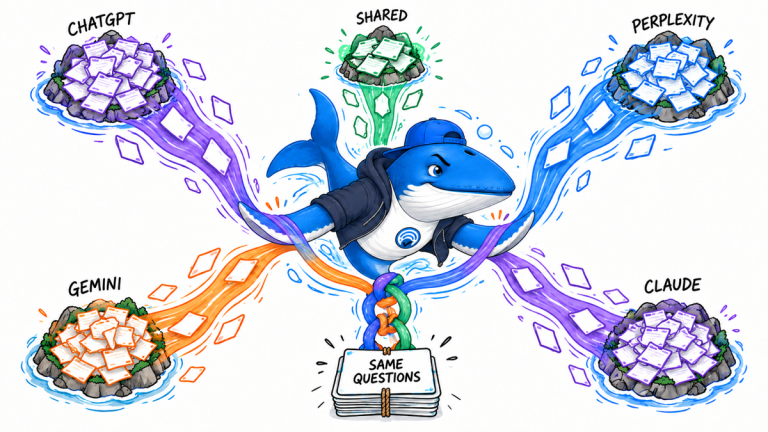
A 160,860-record Chinese-language study shows why interface belongs in every AI visibility observation.
A 2026 U.S. desktop study separates ChatGPT’s session-level outbound-click rate from an estimated 9.4% reduction in traditional search use.
Three prominent 2026 findings use different samples, treatments and outcomes. Here is the denominator-safe comparison.
An ACL 2026 study shows how updated pages, related content and unreliable dates leak post-cutoff facts into retrospective research.
An EACL 2026 study compares GPT-4o, GPT-5, Perplexity and Qwen across 100 misinformation-prone claims—and reveals a tightly bounded result.
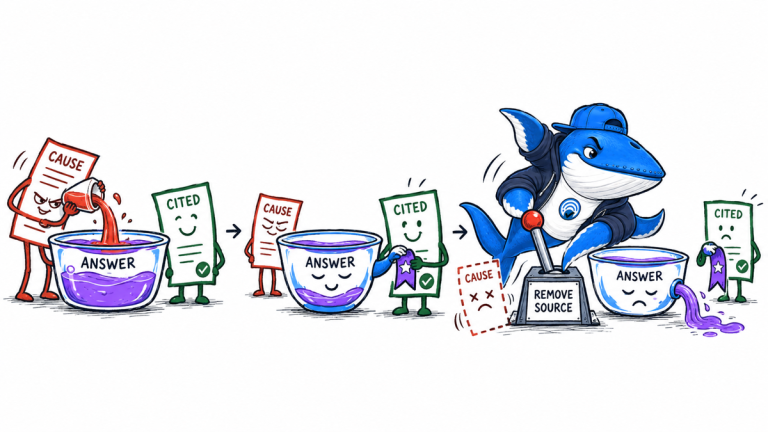
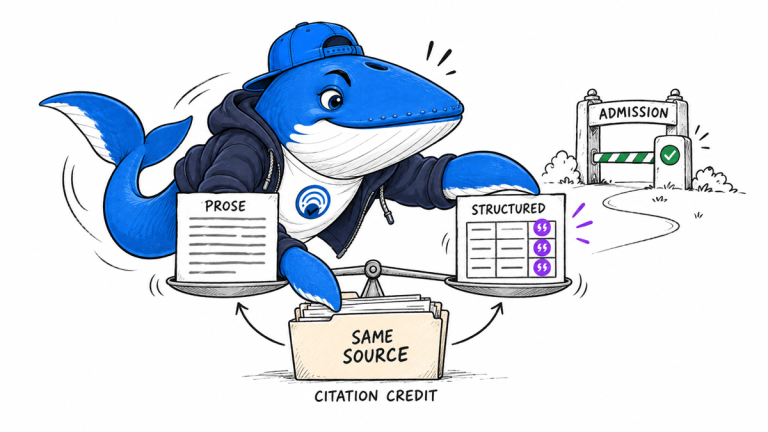
A public cross-platform dataset shows why the number of citations and the depth of a source’s contribution to an answer must be measured separately.
A preregistered protocol for testing whether a vendor visibility score predicts page-matched AI referral traffic. Results pending.
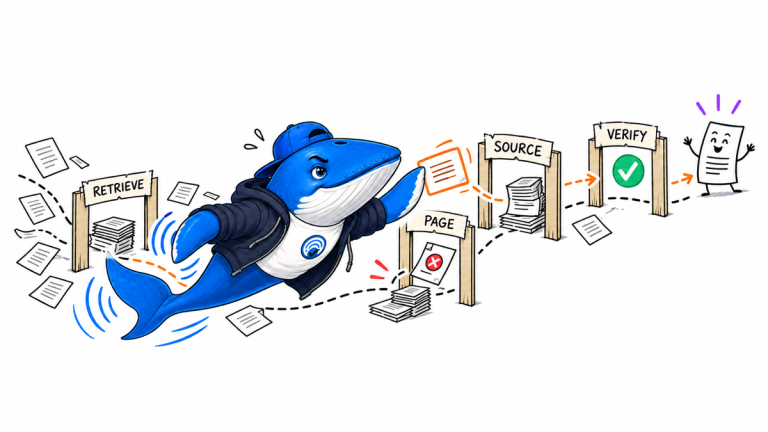
A critical 2026 survey separates retrieval, citation, absorption and downstream behavior—and finds the evidence narrower than most GEO claims.
A useful standard
How to read SearchEngineAnswer research
A useful study makes its conditions visible. Treat each result as evidence within a declared sample and environment, not as a universal platform rule.
Method before conclusion
The question, inputs, environment, measures, and stopping rule should be understandable before the result is interpreted.
Failures stay in the record
Timeouts, absent results, rejected cases, and contradictory observations are data, not material to hide.
Limits remain visible
A measured association or one platform observation does not automatically establish causation or a permanent ranking rule.
References and next steps