
Ahrefs study shows why a missing AI citation needs more context
A 20-day vendor study tracks citation losses and returns. A fictional seven-day example shows why reports need explicit denominators and separate outcome labels.
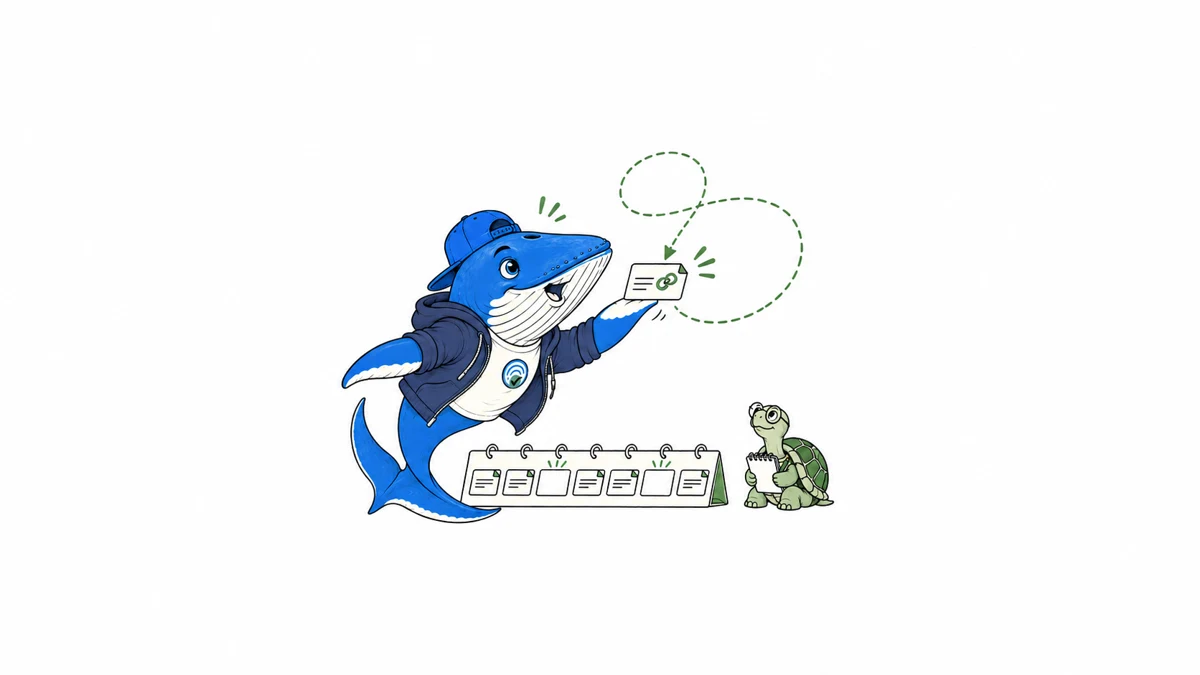
A missing AI citation is not enough evidence to conclude that a page has lost visibility permanently. An Ahrefs study published on October 29 followed roughly 37,500 day-one citation records across five AI tools for 20 days and found that citations often disappeared and later returned.
The study tracks which websites cite the same questions over time. Its main sample and supplementary Brand Radar checks are separate datasets. The findings should not be treated as a guarantee that a particular page URL will return, or as proof that a page edit caused a later appearance.
Ask whether the answer cited any source
Ahrefs reports that answers without source citations affected the apparent loss rate, particularly for Gemini and Copilot. An answer that names no sources is different from one that cites other websites while omitting yours. Keep those states separate in a visibility record.
The same principle applies to a brand mention. An answer can name a company without linking to its website, or link to a source without naming its publisher in the prose. A useful report should say which event it counted rather than label every outcome “AI visibility.”
One fictional week, two different denominators
The following example is invented to show how a measurement choice changes the result. Assume all seven scheduled checks produced an answer. Five answers cited at least one source, and three cited the monitored website. No page changes were made during this illustrative week.
| Check | Answer cites a source | Monitored website cited |
|---|---|---|
| Day 1 | Yes | Yes |
| Day 2 | Yes | No |
| Day 3 | No | No |
| Day 4 | Yes | Yes |
| Day 5 | Yes | No |
| Day 6 | No | No |
| Day 7 | Yes | Yes |
The website appeared in 3 of 7 answered checks (42.9%). Of the 5 answers that cited a source, it appeared in 3 (60%). Both calculations describe the same fictional record. The first asks how often a completed answer included the website; the second asks how often it appeared when the system supplied any citations. Neither is a traffic measure.
Keep the study’s limits beside the conclusion
Ahrefs reports that roughly three quarters of citations that disappeared at least once returned within the study window. That window limits the conclusion: a citation lost near the end had less time to return. The analysis also tracked the first disappearance, not every later cycle.
This is vendor-authored observational research. Prompt selection, collection dates, geography, account conditions, and platform changes affect how far the findings can be generalized. Associations with search rankings or page features do not establish that changing one feature will make a citation persist.
SearchEngineAnswer reviewed the published method and did not reproduce the experiment. Use the AI visibility measurement crosswalk to define your denominator, and the publishing guide to document a justified page improvement. If a citation returns after an edit, preserve that observation without treating the timing alone as evidence that the edit worked.
Keep learning
Continue this topic
Audit citations
Locate the failing answer layer
Compare evidence
Separate mentions, citations and visits
Measure referrals
Check AI search visits in GA4
Research
Ask a question or join the discussion