
ChatGPT now accepts audio uploads, but interview quotes still need listening
ChatGPT audio uploads can help locate interview material. Verify wording, speaker and context against the recording before publishing a quote.
Tools and workflow coverage
Articles about APIs, retrieval systems, automation, testing, and the evidence needed to reproduce a result. This is an editorial archive; focused browser utilities live in the separate Tools library.
Latest stories
APIs, retrieval systems, integrations and practical tests.

ChatGPT audio uploads can help locate interview material. Verify wording, speaker and context against the recording before publishing a quote.

Before activating an automated Shopify policy, preserve custom wording and translations, then compare the replacement with your actual store practices.

Google scheduled the legacy Deep Research API agent’s shutdown. Choose a replacement by job, then verify the complete research handoff.

Haiku 5.5 introduces lower token prices and adjustable effort. This worked SEO batching example separates inference cost from review and change risk.

Shopify adds optional weekly translation sync and eight language slots in named markets. Urgent product changes still need an immediate review route.

Perplexity’s Agent API now returns typed image results with image and source-page URLs. This guide maps the documented response to a four-gate provenance and rights review.
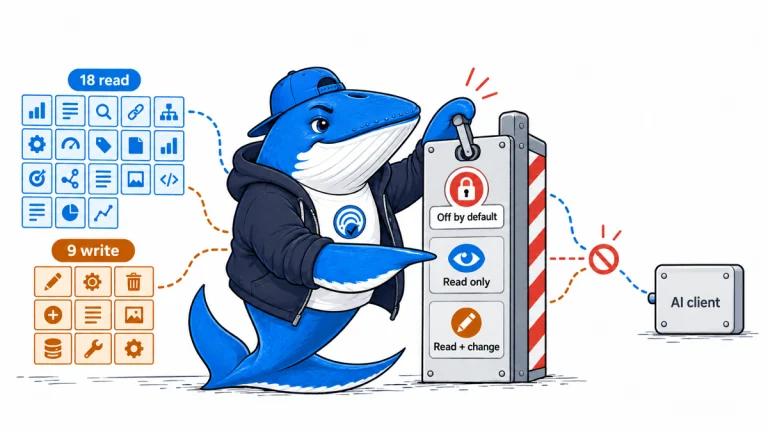
SEOPress 10.3 adds a built-in MCP server with 18 read-only and nine write-capable tools. A live upgrade check confirms that installing the release does not expose a site until its owner enables the endpoint.

Tavily’s language boost and strict filter make different promises. Use this 12-row unmeasured fixture to test compliance, source overlap, availability and relevance.

Cloudflare AI Search is generally available with image embeddings, OCR, hybrid retrieval and usage pricing. This worksheet separates the cost and quality decisions.
From this desk
Guides and practical resources for the questions behind the news.
Read the featured method
A useful workflow story records the account state, request, expected output, retained evidence, and stop condition beside the result.
A useful standard
A workflow is useful when another person can inspect what went in, what happened, what failed, and why the result changed a decision.
Preserve the request, configuration, account state, environment, and relevant versions before interpreting the response.
Keep timeouts, empty results, parser errors, retries, and zero-result runs. Removing them hides how the real system behaves.
Use stable internal labels for credentials and redact tokens, personal data, and licensed content that should not enter a report.
References and next steps
The Answer Brief
Get practical SEO and AI-search guidance, new experiments, and the workflows worth keeping.
Unsubscribe anytime. Your inbox stays yours.
Practical, evidence-based answers for earning visibility in search engines and AI answers.
Get the Chrome extension Read the living case study
Independent publication. Sources, corrections, authorship, and commercial relationships are disclosed openly.
Search the publication
Search reporting, guides, research, checklists, and browser tools.
SearchEngineAnswer app
Install the site on your home screen for a focused, standalone reading experience. No app-store account is required.
On iPhone or iPad, open the browser Share menu and choose “Add to Home Screen.” On other devices, use your browser’s Install option when available.
Privacy controls
Required for security, saved controls, and remembering this choice.
Analytics and advertising use separate Google consent controls when available. These site preferences do not change Google consent.