Claude adds customer attribution and enforcement events for API platforms
User profiles identify the customer behind a Claude API request. Beta webhooks report enforcement changes, with access and reconciliation limits.
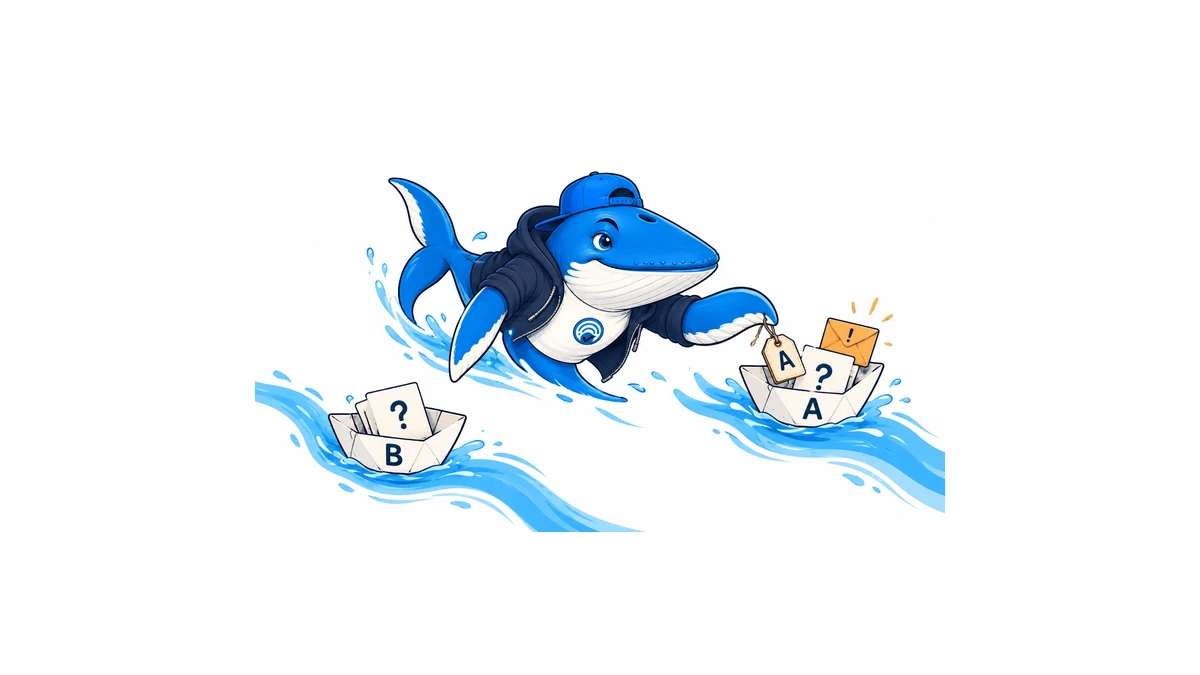
Anthropic has added user profiles to attribute Claude API requests to the customers a platform or gateway serves. Its October 20 release notes also introduce beta organization webhooks for profile enforcement events. For teams sharing API access across customers, the change creates a more specific unit for attribution and recovery work.
Attach the customer to the request
The user-profile documentation says an operator registers an end customer and sends the returned profile ID in the anthropic-user-profile-id header. Anthropic says a safety restriction or ban can then apply to that customer rather than the entire organization. This is an attribution contract, not a guarantee against every organization-level interruption.
The profile represents an application user or a company receiving resold API access, depending on the integration. Those cases have different access_type values. An operator’s own traffic is a separate case; the documentation recommends keeping it in a separate organization. A workspace does not need its own customer profile.
Profiles contain the details the operator supplies and relevant program status. Anthropic says it does not independently verify the details, and the profile does not contain conversation content. A profile ID therefore cannot establish who approved a publication or which passage supports an answer.
Treat enforcement events as state changes
The webhook guide documents events for an enforcement action opening and ending. Access requires account enablement, the beta header, and an organization without HIPAA readiness enabled. The release notes date the announcement to October 20; they do not establish universal webhook availability.
Verify each event’s signature before trusting it, acknowledge delivery promptly, and perform slower work afterward. Keep event identity and processing state, so duplicate delivery does not repeat an operational action. The documentation also notes an exception: deleting a profile ends its open actions without emitting the usual resolved event. A local status view needs a reconciliation path for that case.
Test attribution before depending on isolation
A fictional agency might run separate research assistants for two customers. A proposed test should confirm that requests for each customer carry the intended profile and that a missing profile is visible in the operator’s own logs. Creating two records alone does not prove subsequent requests were tagged correctly.
- Check the application’s customer-to-profile mapping without logging sensitive customer details.
- Exercise an absent or incorrect profile in a controlled fixture and confirm the failure is detectable.
- Verify signed-event handling, duplicate processing, and the path for a deleted profile.
- Keep editorial approval and claim verification in their own records. An API enforcement event cannot substitute for either.
These are proposed integration checks, not a report of live enforcement tests. SearchEngineAnswer did not create profiles, configure webhooks, or trigger restrictions for this article. Teams should validate the current API contract and their access state before implementation.
For adjacent evidence, the Claude Compliance API guide covers session records, while the OpenTelemetry guide covers tracing. Attribution, retained transcripts, and traces answer different operational questions.
Keep learning
Continue this topic
Earlier in this topic
Claude adds OpenTelemetry export for tracing research failures
Tools & Workflows
Ask a question or join the discussion