
Claude Text Watermark: Not Hidden Characters or SEO
Anthropic’s proposed Claude watermark uses statistical word-choice patterns in future models, not hidden Unicode characters, metadata, or an AI-detector score.
SEO desk
Reporting, guides, and practical analysis about technical SEO, content architecture, site launches, crawling, indexing, and measurement.
From this desk
The featured page offers a strong introduction. The remaining cards help readers move through this editorial section without turning the archive into a service menu.
Read the featured guide
Clear indexing and template blockers before polishing lower-impact details. The audit framework shows the order and the evidence to record.
Latest SEO stories
Browse the archive in publication order. Each article keeps its evidence, examples, limitations, and next action together.
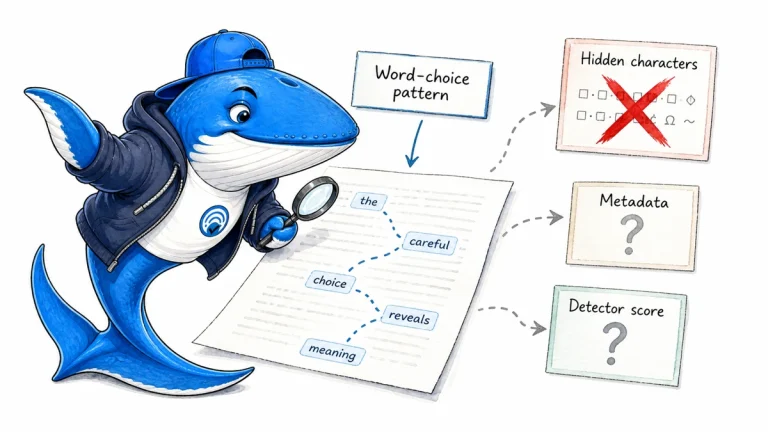
Anthropic’s proposed Claude watermark uses statistical word-choice patterns in future models, not hidden Unicode characters, metadata, or an AI-detector score.
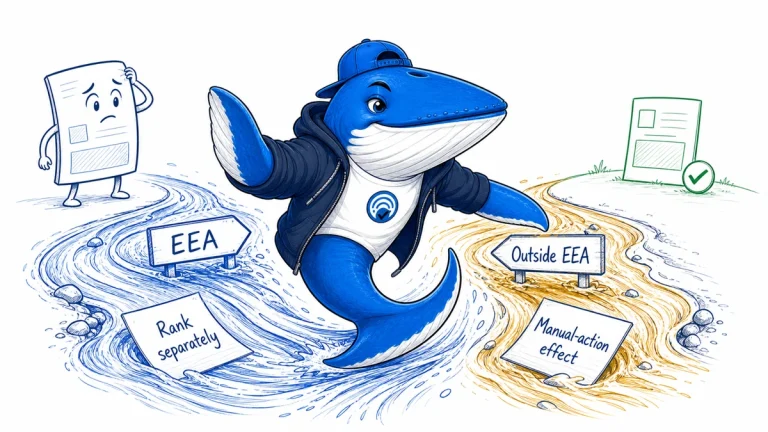
Beginning August 30, Google says site-reputation manual actions will have different effects inside and outside the EEA. The policy remains in force, and third-party sections can still be separated to rank independently.
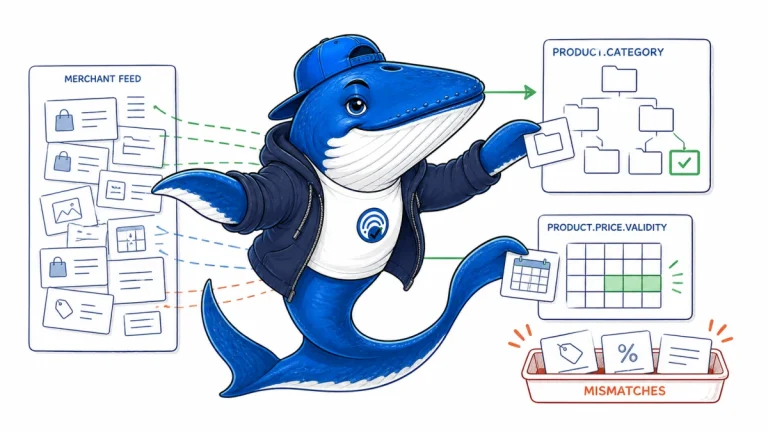
Map Merchant Center product type and Google product category values to Product.category, then align sale price dates with Offer and PriceSpecification fields.
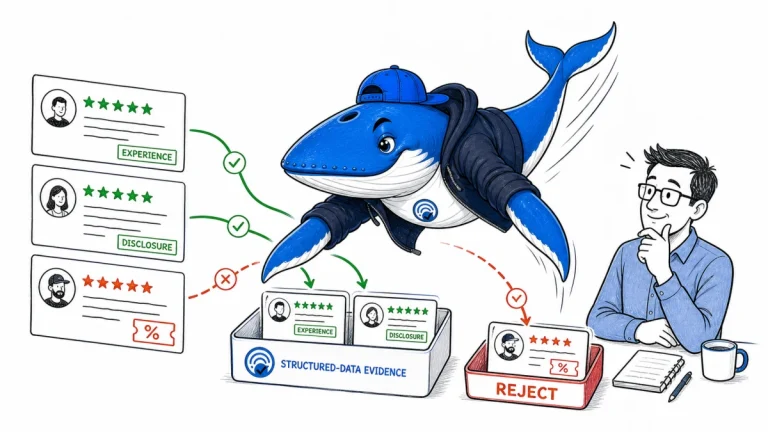
Audit experience, incentives, disclosures, visible-page parity and aggregate math with a 22-field review markup ledger.
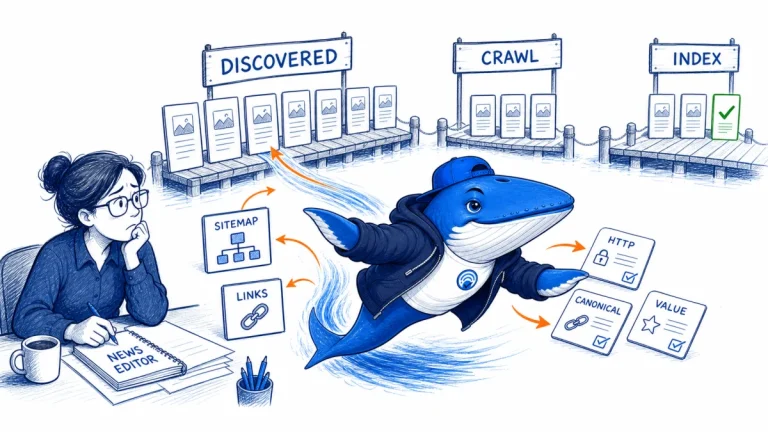
Diagnose discovered currently not indexed with crawl logs, canonical checks, cohort evidence and a six-artifact case file that separates normal Googlebot from inspection fetches.
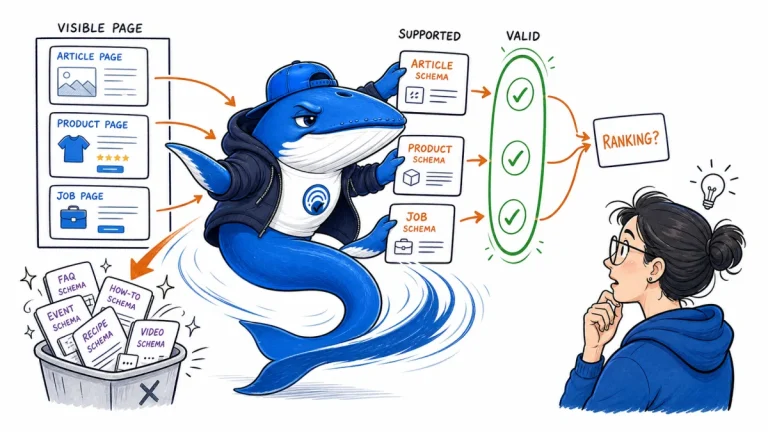
Choose schema by the page’s visible job and a documented search feature, then separate rich-result eligibility, machine understanding, validation, and ranking claims.
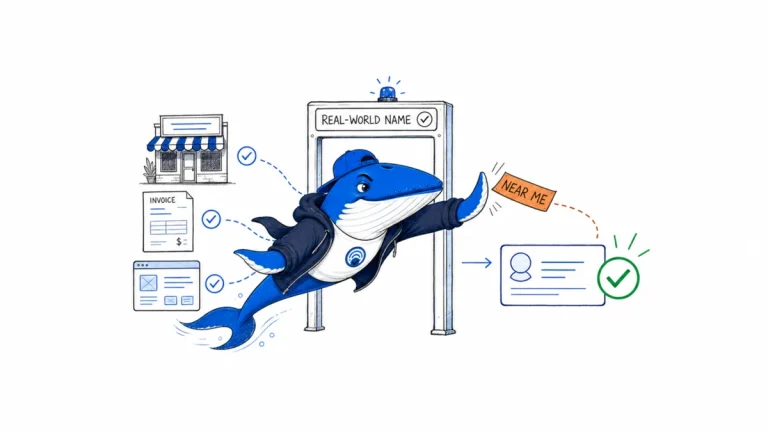
Apply Google’s real-world-name rule to a legally registered “near me” brand with a 20-field evidence audit and a keep, correct or escalate decision.
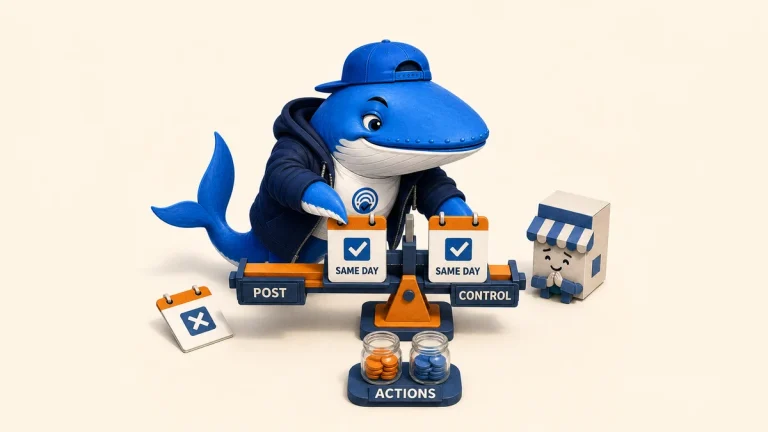
Use matched weekdays, one primary action, live-post checks, UTM discipline, and explicit confounders to compare Business Profile post and control windows without treating interaction counts as ranking proof.
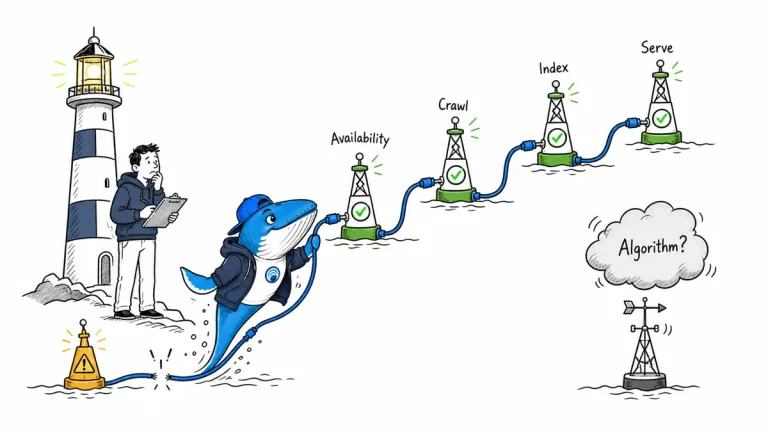
Reconstruct the availability timeline, crawler-facing status, recovery signals and competing explanations before attributing a search decline to an outage or update.
A useful standard
Choose the page that matches the decision in front of you. Each answer distinguishes documented requirements from recommended practice and keeps uncertainty visible.
Resolve crawl, index, rendering, and template failures before spending time on refinements that search systems may never see.
Map each page to a reader decision so internal links, headings, and content depth support a clear purpose.
Treat Search Console, analytics, crawls, and experiments as different evidence sources. None proves causation on its own.
References and next steps
The Answer Brief
Get practical SEO and AI-search guidance, new experiments, and the workflows worth keeping.
Unsubscribe anytime. Your inbox stays yours.
Practical, evidence-based answers for earning visibility in search engines and AI answers.
Get the Chrome extension Read the living case study
Independent publication. Sources, corrections, authorship, and commercial relationships are disclosed openly.
Search the publication
Search reporting, guides, research, checklists, and browser tools.
SearchEngineAnswer app
Install the site on your home screen for a focused, standalone reading experience. No app-store account is required.
On iPhone or iPad, open the browser Share menu and choose “Add to Home Screen.” On other devices, use your browser’s Install option when available.
Privacy controls
Required for security, saved controls, and remembering this choice.
No analytics service is currently configured.
No advertising or behavioral targeting is currently configured.