Schema.org 30.0 Is Not a Google Rich Result Update
Schema.org 30.0 expanded the vocabulary, but a vocabulary release does not automatically create Google rich-result support. Audit the two layers separately.
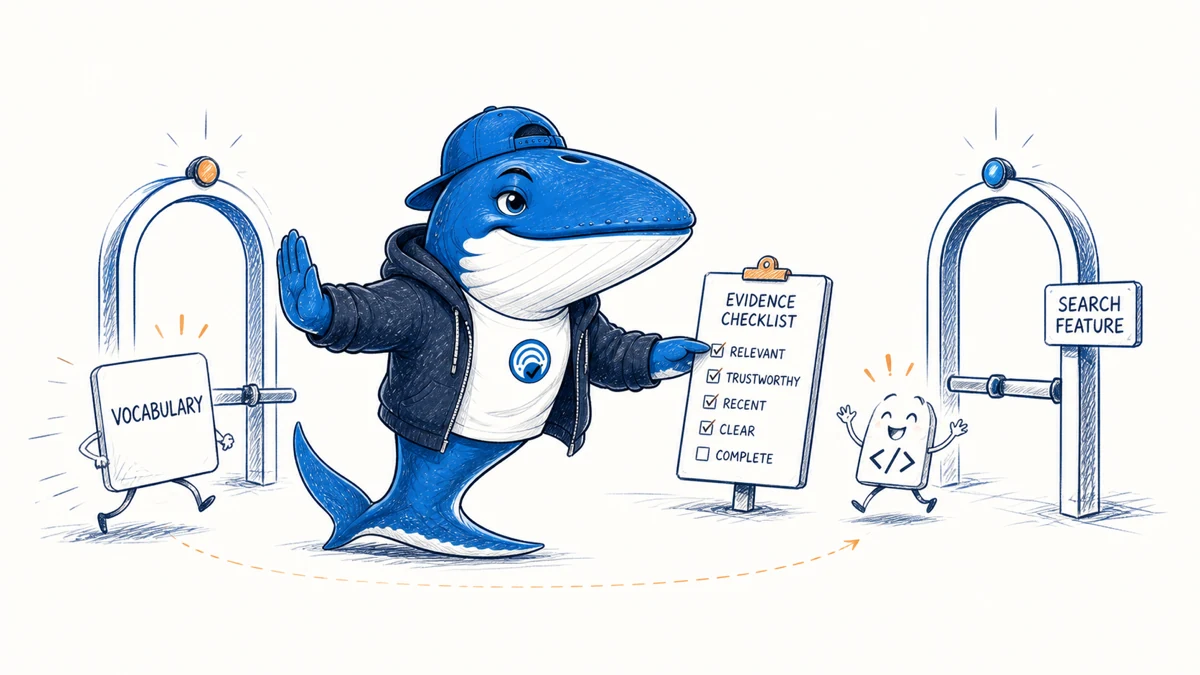
Direct answer: Schema.org released version 30.0 on March 19, 2026. That release expands and refines the shared vocabulary. It is not, by itself, a Google Search rich-result update.
Schema.org and Google documentation answer different questions. Schema.org says which terms can describe data. Google Search documentation says which structured data Google currently documents for Search features and what eligibility rules apply. A term can be valid Schema.org vocabulary without producing a special Google result.
Separate the three contracts
| Contract | Owner | What it establishes |
|---|---|---|
| Vocabulary | Schema.org community | Types, properties, expected values, examples |
| Serialization | Web standards and parsers | How data is expressed in JSON-LD, Microdata, or RDFa |
| Search feature | Individual search engine | Documented eligibility, required properties, and display behavior |
Passing a generic Schema.org validator proves neither Google eligibility nor a guaranteed visual treatment. Passing Google’s Rich Results Test indicates that Google recognizes supported markup on the tested page; it still does not guarantee display.
What Schema.org 30.0 added
The official release notes list additions and revisions such as equivalence annotations, Digital Product Passport examples, the Credential type, Error and errorCode, and other property or example updates. Review the release notes for the exact term, status, and issue history relevant to an implementation.
Do not turn this list into a blanket implementation recommendation. A site should use a new term only when it accurately describes visible or otherwise appropriate data, the publishing system can maintain it, and a known consumer benefits from it.
If the business goal is Google Search appearance, check Google’s current structured-data gallery and the documentation for that specific feature. If the term is absent, describe it as Schema.org markup rather than “Google-supported rich-result markup.”
Audit a proposed implementation
- Name the page type, reader job, data owner, and intended consumer.
- Confirm the term exists in the current Schema.org release and is not pending or superseded.
- Check domain, range, nesting, cardinality, and examples against the source data.
- Check the relevant search-engine documentation separately.
- Render the page and confirm markup agrees with visible content.
- Test syntax, then test product-specific eligibility where a documented feature exists.
- Assign an owner and update trigger for source data and vocabulary changes.
The technical launch checklist helps verify rendered markup and templates. The Schema.org usage data article shows why web adoption is another separate question.
Write the claim correctly
Safe: “Schema.org 30.0 introduced or revised these vocabulary terms.” Safe with product evidence: “Google documents this markup for this Search feature, subject to its eligibility guidance.” Unsafe: “Schema.org 30.0 unlocks new Google rich results” when Google has not published that support.
Search engines can understand data for purposes they do not disclose or display, but that possibility is not a measurable implementation benefit. Prefer a named consumer and documented use over speculative “AI visibility” claims.
Monitor the Schema.org release page, the relevant search documentation, validation behavior, Search Console reports, and visible results. A vocabulary change and a search-product change may happen at different times or never converge.
Keep learning
Ask a question or join the discussion