
The 16% Synthetic-Source Finding Depends on an AI Detector
A 712-query audit found detector-classified synthetic pages among citations, but 27.1% of cited URLs were not analyzed and page accuracy was not tested.
Research desk
Original tests, case studies, datasets, and evidence reviews with inspectable methods, results, and limitations.
From this desk
The featured page offers a strong introduction. The remaining cards help readers move through this editorial section without turning the archive into a service menu.
Read the flagship case study
This first-person build record connects publishing decisions with indexing evidence, Search Console observations, limitations, and the next measurement window.
Latest research
Each research article identifies the question, evidence, method, result, limitation, and boundary on what can be inferred.

A 712-query audit found detector-classified synthetic pages among citations, but 27.1% of cited URLs were not analyzed and page accuracy was not tested.
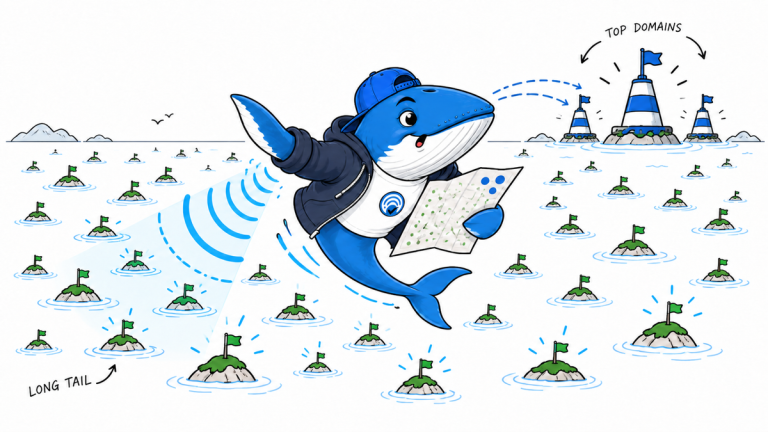
A source-long-tail recomputation plus a separate LinkedIn engine-mix example show why aggregate AI citation rankings can hide most domains and platform dependence.
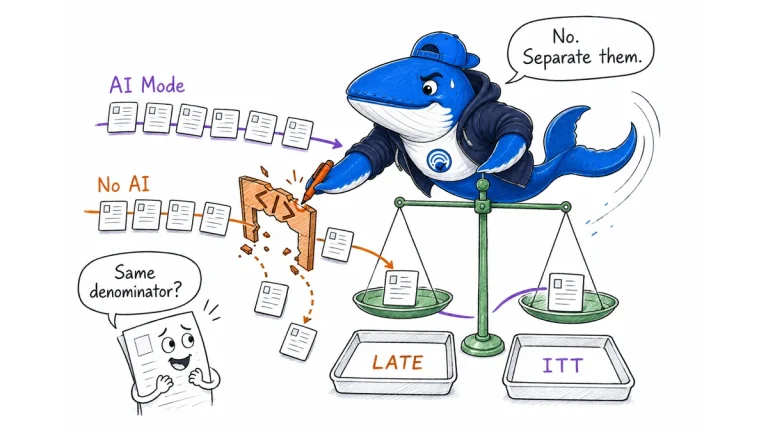
A field experiment found AI Mode assignment reduced publisher click-through by 18.8 points. Separate ITT, LATE, limits and site-specific measurement.
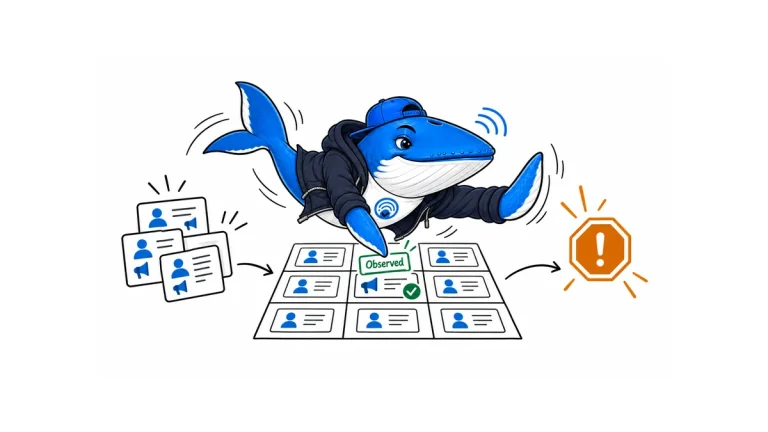
A 91-account audit recorded 3,602 ChatGPT ads. See the delivery rate, count discrepancies, income finding, limits and audit ledger.
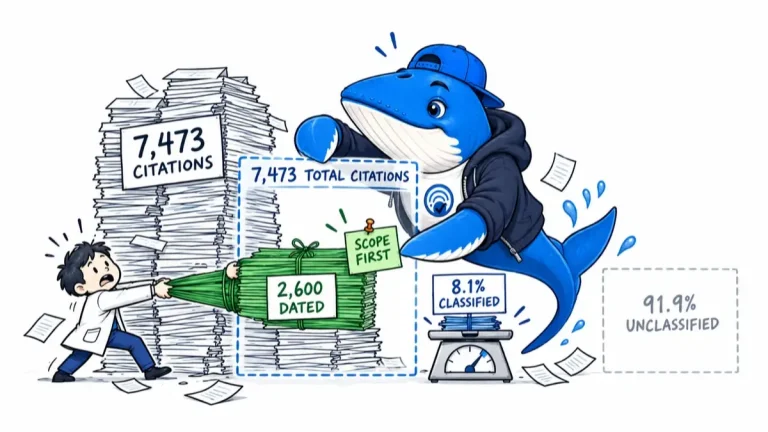
BrandGhost’s latest Observatory run offers useful signals about citation age and engine overlap, but its date and source-category coverage materially limit broader claims.
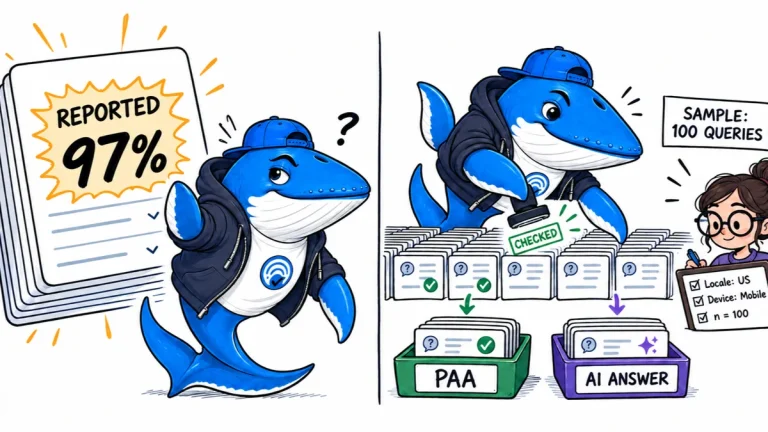
A third-party report says AI-generated People Also Ask answers reached 97% of its English-language sample. Here is what the number can support and how to audit it.

The W3C commerce workshop exposed a stack, not one standard: transaction protocols, product data, identity, consent, payment and trust still need to interoperate.
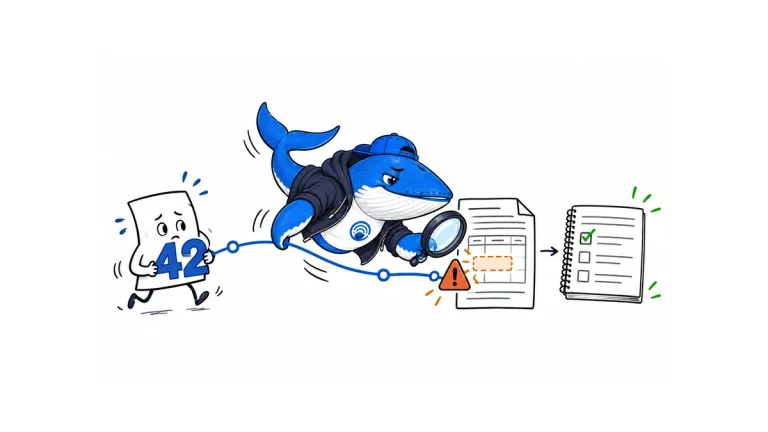
We recalculated two public Perplexity citation files, separated row and claim denominators, and built a four-state audit for numerical source support.

Two September 2026 papers study GEO defenses. Compare factual distortion with source-selection manipulation, and download our evidence-review worksheet.
A useful standard
A useful study makes its conditions visible. Treat each result as evidence within a declared sample and environment, not as a universal platform rule.
The question, inputs, environment, measures, and stopping rule should be understandable before the result is interpreted.
Timeouts, absent results, rejected cases, and contradictory observations are data, not material to hide.
A measured association or one platform observation does not automatically establish causation or a permanent ranking rule.
References and next steps
The Answer Brief
Get practical SEO and AI-search guidance, new experiments, and the workflows worth keeping.
Unsubscribe anytime. Your inbox stays yours.
Practical, evidence-based answers for earning visibility in search engines and AI answers.
Get the Chrome extension Read the living case study
Independent publication. Sources, corrections, authorship, and commercial relationships are disclosed openly.
Search the publication
Search reporting, guides, research, checklists, and browser tools.
SearchEngineAnswer app
Install the site on your home screen for a focused, standalone reading experience. No app-store account is required.
On iPhone or iPad, open the browser Share menu and choose “Add to Home Screen.” On other devices, use your browser’s Install option when available.
Privacy controls
Required for security, saved controls, and remembering this choice.
No analytics service is currently configured.
No advertising or behavioral targeting is currently configured.