Google plans Guided Learning pilot in Search for U.S. schools
The November pilot will cover selected U.S. schools. Education publishers should distinguish it from the separate global Google Classroom launch.
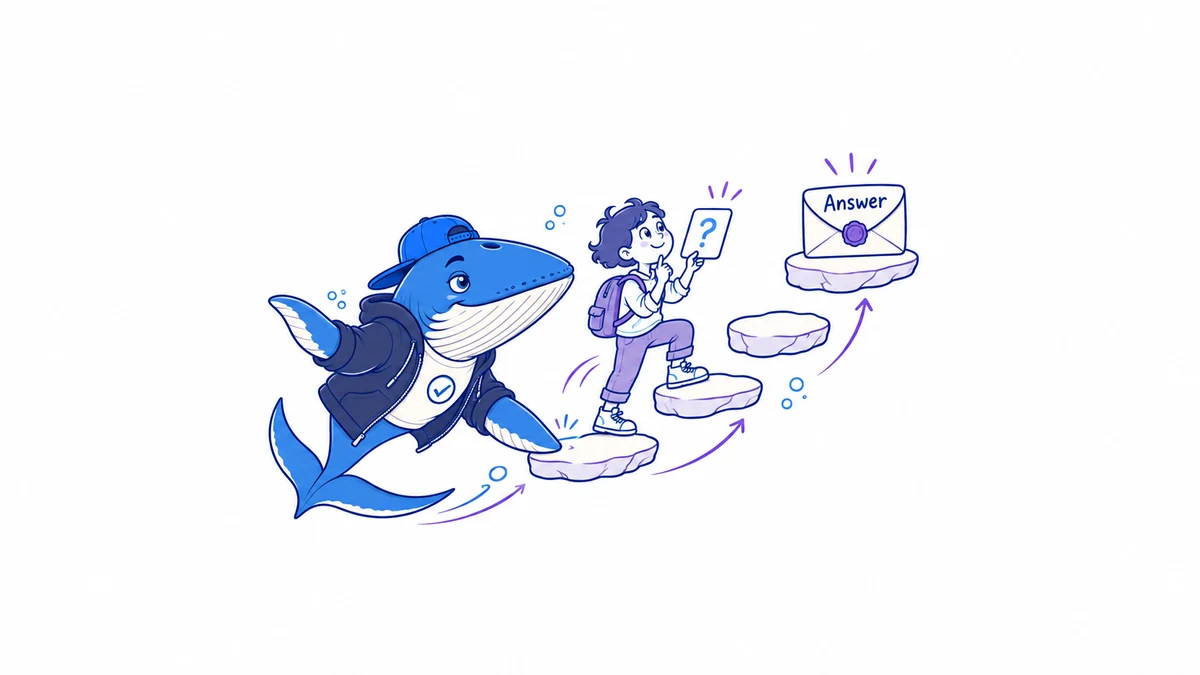
Google plans to pilot Guided Learning in Search in selected U.S. schools later in November. The experience is intended to help student accounts work through certain homework questions in stages, according to the company’s November 3 announcement.
That timing gives education publishers a specific development to follow. It does not set a general launch for everyone using Search, and it provides no way to measure how the pilot will affect visits to educational websites.
The Search pilot and Classroom launch have different scopes
In its detailed announcement, Google describes Search prompts that help students reason through a problem instead of receiving the final answer immediately. The company says it will gather educator feedback in the initial U.S. pilot before expanding to other districts in the coming months.
The same announcement says Guided Learning became globally available in Google Classroom on November 3. That teacher-assigned experience is anchored in class material. The Classroom availability statement cannot be used as evidence that Guided Learning in Search is globally available.
Google also outlines forthcoming changes that would keep the named products, including Search, off for K-12 student accounts until school administrators enable them. It says schools will receive more details ahead of rollout. Publishers should treat that as a future account-control change, rather than assume every school account has already changed state.
Review the learning task before rewriting a page
A fictional physics publisher might have a formula reference, a worked example and an exercise page covering the same topic. Each serves a different need. The reference helps a reader retrieve a relationship; the example explains a method; the exercise lets the reader practice and check reasoning. Keep those jobs explicit when evaluating whether an existing page is useful.
For the worked example, inspect whether the assumptions, intermediate steps and units are clear. For the exercise, check that hints and explanations are accurate and accessible. These are reader-focused edits that can be justified independently of the pilot. They are not evidence that a particular heading, hint format, or amount of detail earns inclusion in Google’s new experience.
What would make a later visibility review useful?
Start with an eligible environment and a defined set of questions if an authorized observation becomes possible. Record the account context, date, query, visible experience, and any source links. Keep student identities, school identifiers and private assignments out of a public research record.
SearchEngineAnswer has not tested this pilot. The announcement supplies no publisher-specific ranking recipe or traffic forecast. A normal result, a source link, and an analytics session would still answer different questions, as the AI visibility measurement crosswalk explains. Use the AI SEO guide to connect observations to a defined reader task before changing an editorial strategy.
Keep learning
Continue this topic
Next in this topic
Cloudflare adds personal-agent controls: what publishers should check
Earlier in this topic
Google plans shared AI-training controls: what publishers should prepare
AEO & AI Search
Ask a question or join the discussion