AI Visibility Tools in 2026: A Buyer’s Measurement Matrix
Compare AI visibility tools by prompt provenance, execution method, evidence access, metric definitions, platform coverage, cadence, and decision fit.
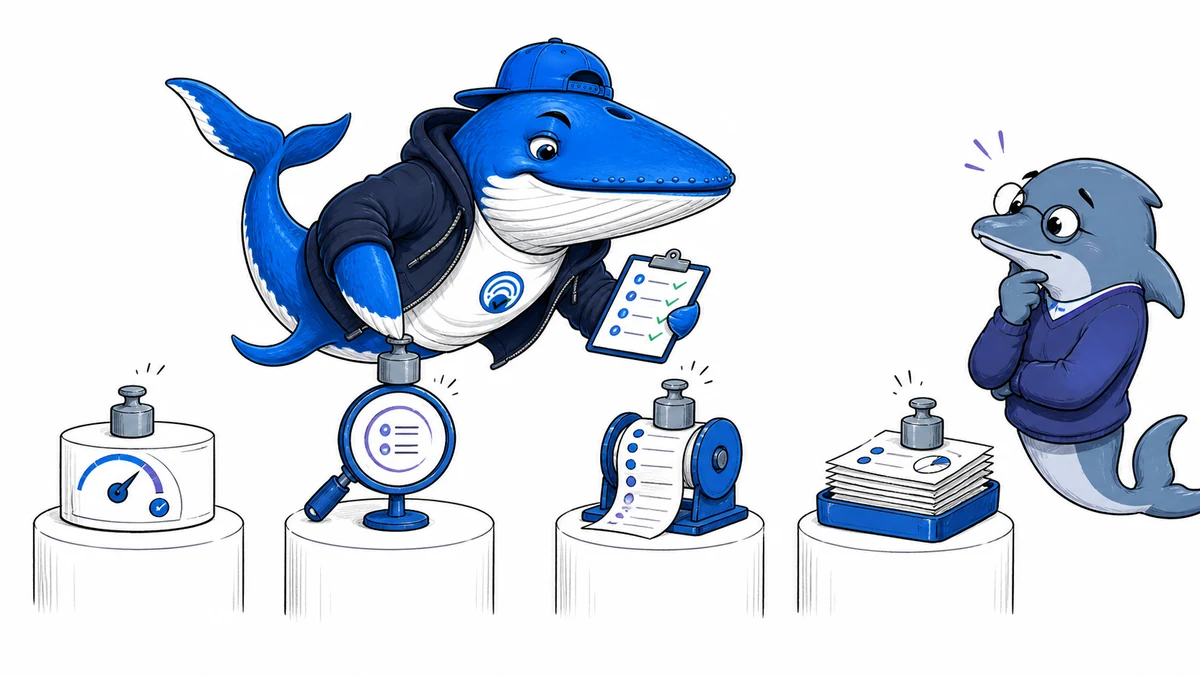
Direct answer: choose an AI visibility tool by the decision it supports, not by the largest score. HubSpot, Semrush, Botify and Profound all expose AI-search measurement products, but their official descriptions reveal different prompt sets, collection methods, update cadences, platform coverage, workflow depth and pricing models.
Review boundary: this dated August 15, 2026 matrix compares public vendor documentation. It is not a hands-on accuracy ranking, affiliate recommendation or claim that one vendor observes a platform’s complete first-party data.
Compare the measurement contract
| Option | Useful public details | Question to verify in a trial |
|---|---|---|
| HubSpot AEO | 25 prompts run daily across ChatGPT, Gemini and Perplexity; 2,500 answers/month; 28-day trial; $50/month or $45/month annually. | How are prompts localized, and which raw answer and export fields can be preserved? |
| Semrush AI Visibility Toolkit | $99/month; 25 tracked prompts; 300 AI Analysis and 1,000 Prompt Research queries/day; AI-readiness audit for 100 pages; 10 CSV exports/day; no free trial. | Which score denominator and competitor set match your decision? |
| Botify AI Visibility | ChatGPT and Google AI Mode via disclosed scraping partners, Perplexity via API; weekly updates; integration with crawl, logs and GSC; calls the data a proxy. | Do its country, login and AI Overview limits match your market? |
| Profound | Starter: $99/month annually, ChatGPT and 50 prompts. Growth: $399/month annually, three engines and 100 prompts. Enterprise documents up to nine engines. | Which answer engines, regions, response volume, history and exports are in the contracted tier? |
| Manual baseline | Small frozen prompt set, saved answers, citations, referrals and business outcomes. | Can the paid system reproduce and extend the baseline? |
Adobe exposes two measurement universes
Adobe’s documentation is a useful warning against comparing dashboard scores before checking their provenance. Its broad AI Visibility view and its configured Brand Visibility tracking are related products, but they do not begin with the same prompt universe.
- AI Visibility baseline
- Adobe says this view uses Semrush’s prompt database without custom setup and covers ChatGPT, Google AI Overviews, Google AI Mode, and Gemini. Its visibility measure compares how often a brand is mentioned across relevant prompts with the median number of competitor mentions. That is a relative mention score, not market share.
- Configured Brand Visibility tracking
- This view begins with a prompt strategy and recurring executions. Adobe separates visibility, mentions, audience, cited pages, agentic traffic, and referral traffic. Those fields describe different events and should remain separate in an export.
Before accepting a score, write down its prompt source, competitor reference, execution cadence, platform surface, and observation unit. Two vendors can display “visibility” while measuring different populations.
Ask eight questions before buying
- Prompt universe: who creates prompts, and can you freeze them?
- Execution: consumer UI, API, or scraper; logged in or logged out; which country and language?
- Frequency: how often is each prompt rerun, and are zero results retained?
- Comparison set: is the denominator your own prompt panel, a vendor database, or a competitor median?
- Metrics: mention, citation, prominence, sentiment, absorption, or referral: which event is actually counted?
- Evidence: can you inspect raw answers, cited URLs, timestamps, and model or surface state?
- Traffic provenance: does the product use browser analytics, server logs, CDN requests, or an inferred estimate?
- Export: can you preserve rows outside the product and reconcile them with logs, analytics, and revenue?
Botify’s documentation is unusually explicit that AI platforms do not provide the vendor first-party visibility data and that its visibility view is a proxy. Treat that disclosure as a useful category-wide buying question, not a criticism of one product.
Run a two-week vendor trial
Create a 20-prompt golden set: direct brand questions, unbranded category decisions, comparisons, factual questions and negatives where your brand should not appear. Run the same set manually before onboarding. Save raw answers and citations.
At one daily run across three engines, 20 prompts create 840 answer opportunities in 14 days (20 × 3 × 14). Add three same-day reruns for each prompt-engine pair at the start and end of the trial and the repeatability audit adds 360 observations (20 × 3 × 3 × 2). Those denominators make missing data and unstable answers visible.
During the trial, score coverage, repeatability, evidence access, localization, exports, workflow usefulness and the time required to resolve a discrepancy. Do not reward a tool merely for reporting a higher visibility percentage. The winning product is the one that improves a real decision and lets your team audit the evidence.
This guide complements the existing framework for evaluating SEO and GEO scores. Use the AI visibility crosswalk to define outputs before comparing dashboards.
Primary documentation
- HubSpot AEO product page.
- Semrush AI Visibility Toolkit documentation.
- Botify AI Visibility FAQ.
- Profound product overview.
- Adobe Brand Visibility: AI Visibility.
- Adobe Brand Visibility: dashboards overview.
Commercial disclosure: SearchEngineAnswer received no payment or access from these vendors for this comparison and uses no affiliate links in this article.
Keep learning
Continue this topic
Next in this topic
ChatGPT Plugin Metadata: Test Tool Selection and Restraint
Earlier in this topic
Cloudflare MCP Detection vs Crawler Control: A 24-Request Test
Tools & Workflows
Ask a question or join the discussion