
Gemini 4 Neon for SEO: evaluate evidence before changing workflows
Check Neon on a bounded publishing task, audit its source trail and preserve your Google Search visibility baseline. Includes illustrative scoring.
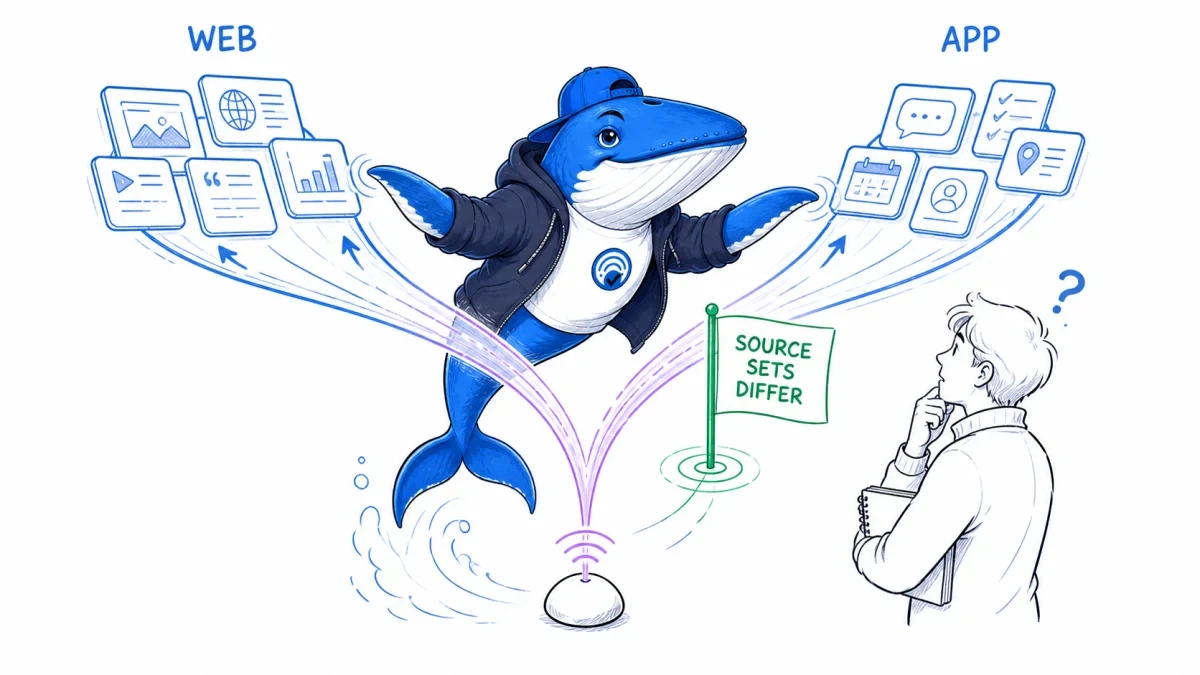
Gemini 4 Neon is a new option for SEO teams working with mixed source material and multi-step deliverables. Google announced it on November 18, with rollout across its developer and paid productivity surfaces. For publishers, the useful decision is how to evaluate a model change without confusing document analysis with visibility in Google Search.
Google’s announcement lists the Gemini API, Google AI Studio, business access, Google Antigravity, and the Gemini app among its rollout surfaces. Account and subscription conditions vary. Confirm the model shown in the product you actually use before running a comparison. An announcement about Gemini app access does not establish which model handled a particular Google Search answer. Google’s Neon announcement
Separate the model from the search surface
An SEO team can use a model to analyze a crawl export, write a brief, or inspect documentation. Those are production tasks. Monitoring whether a business appears in AI Mode or an AI Overview is a visibility task. They need separate records, even when the interfaces share a familiar product name.
For a production task, record the selected model, supplied files, and enabled tools. For a search observation, record the query, country, language, account state, interface, and time. If the interface does not expose the underlying model, leave that field unknown. Inferring it from answer style makes the dataset harder to trust.
This distinction protects historical comparisons. Suppose a visibility monitor records fewer brand mentions after a model launch. The launch alone does not explain the change. Retrieval, account context, prompt wording, and ordinary answer variability are competing explanations. A useful investigation preserves the original conditions and changes one factor at a time.
Use a publisher task with a concrete output
Start with a document reconciliation assignment. Give the model an existing article, two official source pages, and a small query export. Ask it to identify facts that need revision, claims with insufficient support, and reader questions the article still leaves unanswered. Require an evidence reference for every proposed factual change.
Do not ask for a complete rewrite as the first step. A change list is easier to inspect, reject, and compare. Once the evidence is checked, authorize the revision with the approved facts and the intended reader decision. This reduces the chance that a broad rewrite removes useful detail while adding a polished but weakly supported explanation.
A technical assignment can use a similar structure. Supply a bounded crawl export and the relevant configuration excerpts. Ask for a prioritized diagnosis with an affected URL example, the evidence field, and the next verification step. The model should leave server behavior unresolved when it only has page markup.
Make the missing-evidence case part of the test
A realistic evaluation includes incomplete information. Give one source an old date, omit a field from a crawl row, and include a query that has no clear landing page. The correct behavior is to expose those gaps. A model that fills them silently creates extra work for the person who must approve the result.
For a ten-case trial, define the expected outcome of each case before running it. For example, six cases may support a decision, two may require a live check, and two may be outside scope. Score whether the output preserves those distinctions. Calling every case actionable can look productive while reducing the report’s usefulness.
Use independent fields for correct decisions and unsupported assertions. If a run resolves eight cases correctly but invents a source for one, report both observations. A single blended score can conceal the error that matters most to a publisher. No controlled Neon SEO benchmark was performed for this article; this is a proposed reference-set design.
Evaluate the source trail paragraph by paragraph
Choose a short passage from the generated draft and mark each externally checkable statement. Open the cited source and locate support for that statement. Record whether the source supports the complete claim, only part of it, or none of it. A correct link label does not settle this question.
Pay particular attention to availability language. A beta feature, a paid account option, and a general release can require different advice. Ask the model to retain those boundaries in the opening and the instructions. Check that the same limits survive in the title, excerpt, and social description.
An illustrative audit might find 12 supported claims, two partially supported claims and one unsupported claim in 15 statements. The fully supported share would be 80%. That percentage describes the reviewed passage, not the model’s general accuracy. Publish the denominator and the classification rules if sharing such an audit.
Measure human correction effort
Record how long it takes a reviewer to approve the deliverable. Separate factual corrections, structural edits, and ordinary house-style changes. The distinction tells you whether the model struggles with the evidence or needs a clearer format specification.
For repeated work, use the same acceptance checklist across runs. A brief might pass only when every recommendation names a reader need, an existing-page decision, and a supporting source. A technical report might require reproducible checks and a reversible next action. The checklist should describe the work your team needs, rather than imitate a public leaderboard.
Compare the model against your current workflow. A historical report prepared from different files is weak evidence of improvement. A paired task using the same inputs offers a more useful comparison. Keep the task small enough that a human can independently inspect the complete output.
Preserve a baseline when Google Search changes
The existing Hydrogen rollout coverage concerns a Google Search development. Keep that observation separate from Neon’s availability in other products. If you monitor AI answers, annotate a confirmed interface change on the relevant date and keep previous measurements available.
Use a fixed query set for a limited paired check. Record the answer, sources, brand mentions, and destinations. Repeat observations under the same declared conditions and report variation. A small convenience sample can reveal a broken monitor or changed interface, but it cannot estimate every searcher’s experience.
Our AI visibility measurement guide provides a vocabulary for keeping appearances and visits distinct. Use it before joining a model evaluation spreadsheet to a traffic dashboard. The two datasets need a stated relationship and a compatible observation window.
Decide whether the workflow is ready
Approve a Neon-assisted workflow when it completes the intended task with a traceable source trail and an acceptable correction burden. Keep it in review when the main failures involve missing evidence, unsupported certainty, or uncontrolled changes to the assignment. A visually impressive report should still pass the same factual checks as a plain document.
Reassess after a relevant model or tool change, using the preserved input packet. The original contribution in this guide is separating production and visibility records, along with a missing-evidence trial and a claim-level audit. It is a method readers can run, with results to be recorded rather than assumed. The GPT-6.2 SEO workflow guide offers a parallel cost and acceptance calculation.
Keep learning
Continue this topic
Next in this topic
How to track Google AI Overviews and AI Mode
Earlier in this topic
GPT-6.2 for SEO: choose Astra or Sol with a practical evaluation
AEO & AI Search
Ask a question or join the discussion