
← Tool directory
Source documentation ↗
TOOL PROFILE

Muffet
Scan a website from the command line to find broken links.
Open source
Community support
0 upvotesSign in to upvote
Upvotes come from SearchEngineAnswer members. GitHub stars and reader reviews are counted separately.
Claim this tool if you maintain it.
- Best for
- Link checks
- Setup required
- Use a supported release binary or build with Go. Start with a small site you can crawl.
- Costs to check
- The checker is open source. Crawls use network and CI resources.
- License in catalog
- MIT
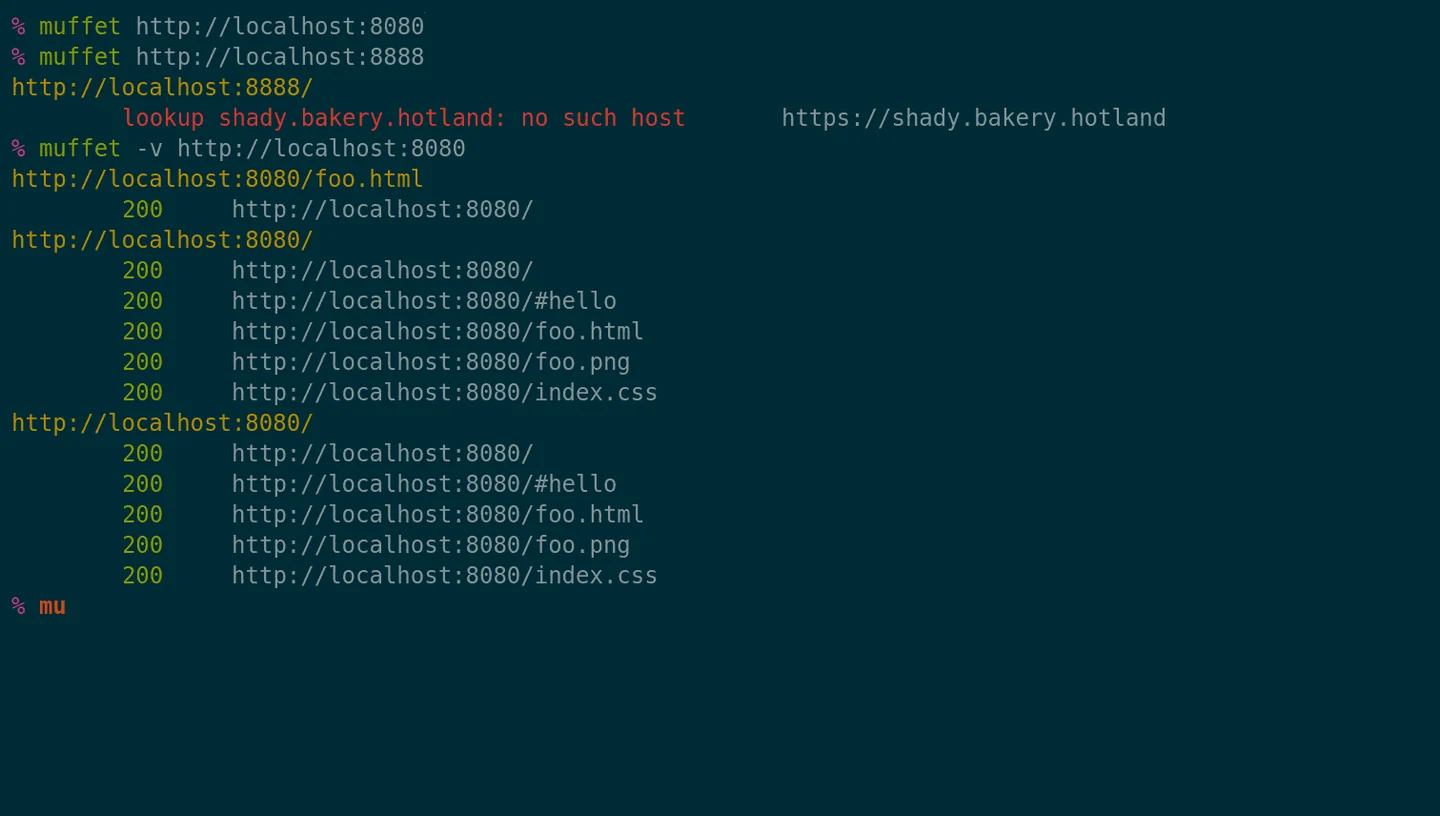
Project screenshot

GitHub repository
- GitHub stars
- 2,622
- Forks
- 112
- Last push
- 2026-11-10
- Primary language
- Go
GitHub snapshot from . Stars count GitHub bookmarks. Reader ratings appear separately below.
How to install Muffet
-
Install Go if you plan to use the source installation command.
go install github.com/raviqqe/muffet/v2@latest - Install Muffet and put the Go binary directory on your PATH so the muffet command can run.
First tutorial for Muffet
- Start from the staging homepage and ensure it links to your test page.
- Run Muffet against the staging homepage and find the deliberately broken URL in the output.
- Repair the link and repeat the crawl to check that the finding disappears.
Where Muffet fits
Use it to check links across a small staging site before a deployment.
- When to choose another tool
- Choose a file-oriented link checker when your inputs are Markdown files and the site is unavailable.
- First evaluation
- Create a staging page with one valid destination and one internal link that returns 404.
- How to interpret the result
- Confirm the reported URL and check it directly. Timeouts and access restrictions can also cause a link check to fail.
Reviews and discussion
Reader reviews
Be the first to share your experience with this tool.
Discussion
Ask a question or share a setup tip.
Flag an outdated detail
Include the field that needs updating and a source link. Copy your draft, then use the corrections policy to contact the editorial team.
Write a review or join the discussion