
DeepSeek sets a November billing deadline for integrated Search and Fetch calls
A temporary free period ends November 1 for specified DeepSeek integrations. Plan for successful request charges separately from model token usage.
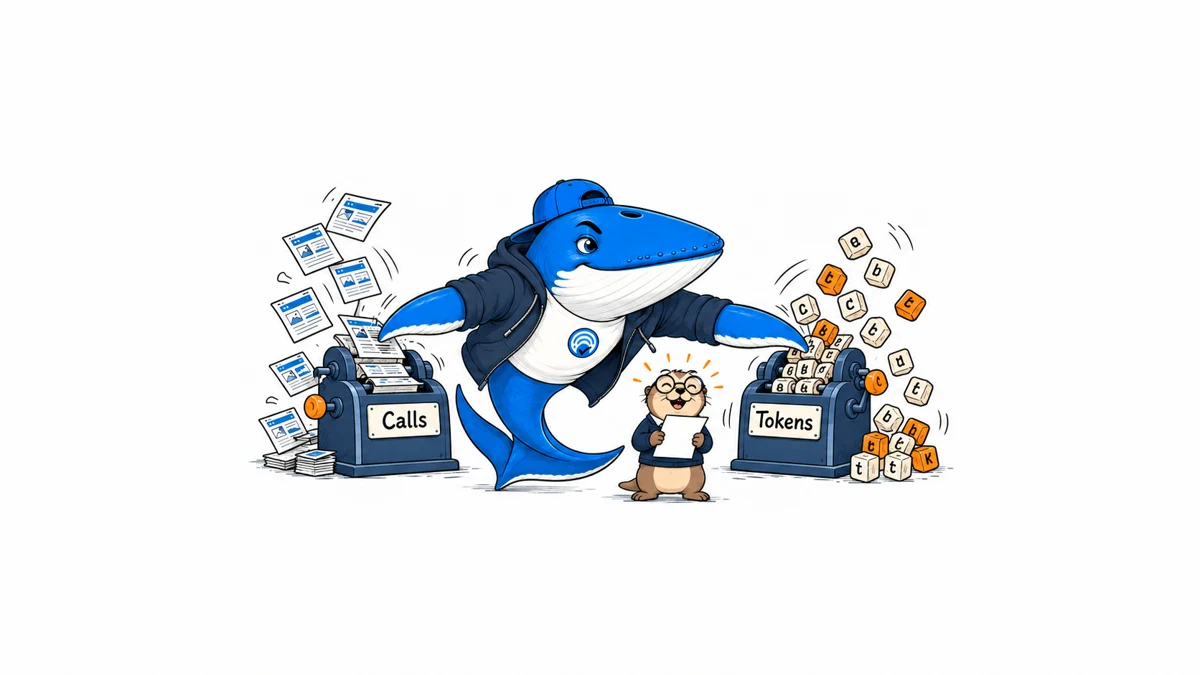
DeepSeek says its temporary free period for certain integrated server-side Search and Fetch calls ends at 00:00 Beijing time on November 1, 2026. Teams using the DeepSeek API through DeepSeek Harness, Claude Code, or Codex should separate those request charges from model token usage when estimating a research workflow’s cost.
The scope matters. The note concerns DeepSeek API use through those integrations. It does not announce a new charge for every user of the named coding tools. DeepSeek’s pricing page lists Search and Fetch at $0.75 per 1,000 successful requests each.
Count requests separately from the results they return
The Search and Fetch guide defines a billable request as HTTP 200 with a non-empty search result array or returned page content. Failed requests, empty searches, and timeouts are not billed. The number of returned search results does not change the per-request price.
A fictional research queue makes the distinction concrete. Suppose a month contains 10,000 billable searches and 5,000 billable page fetches. At the listed rate, searches cost $7.5,0 and fetches cost $3.75, for $11.25 in tool-request charges. This is arithmetic using hypothetical counts, not observed spending or an estimate of the complete application bill.
| Operation | Billable requests | Calculation |
|---|---|---|
| Search | 10,000 | 10,000 ÷ 1,000 × $0.75 = $7.50 |
| Fetch | 5,000 | 5,000 ÷ 1,000 × $0.75 = $3.75 |
| Tool subtotal | 15,000 across both operations | $7.50 + $3.75 = $11.25 |
Model input and output, other services, and any applicable charges outside these two operations are excluded. A successful retry is another request to inspect; an earlier failed attempt should not be silently counted as a successful billable call. Preserve the actual status and result state before estimating the total.
Check which layer a budget actually covers
For a proposed pre-deadline review, identify the provider handling the model call and the service handling web access. Then inspect the application’s cost controls. A token ceiling can constrain generation while leaving the number of retrieval attempts unchanged. A search-call limit can constrain discovery while leaving a long model response untouched.
Use a short, authorized test with a known question set if your team needs measured costs. Record successful searches, successful fetches, model usage, and failed attempts separately. Decide the stop rule before running the queue, and compare the completed work with the original research task rather than judging cost alone.
An upcoming billing change, not a new launch today
DeepSeek’s changelog dates the native search API announcement to October 17. The current deadline is the temporary billing transition described in the documentation. Recheck both the price and the integration scope before relying on them after November 1.
SearchEngineAnswer reviewed the documentation and made no paid API calls. The cross-platform web-search study concerns a different surface: observed product behavior. The Exa retrieval guide addresses evidence returned to an agent. Neither establishes DeepSeek’s native billing rules or predicts the quality of a particular research run.
Keep learning
Continue this topic
Next in this topic
Cloudflare open-sources Kitesurf for AI agents
Earlier in this topic
SEOnaut tutorial: run your first crawl and verify the fixes
Tools & Workflows
Ask a question or join the discussion