ChatGPT Could Join UK Search Choice Screens Under New Attribution Rules
A CMA proposal could let general-purpose AI assistants qualify for UK search choice screens if they meet search, safety and source-attribution requirements.
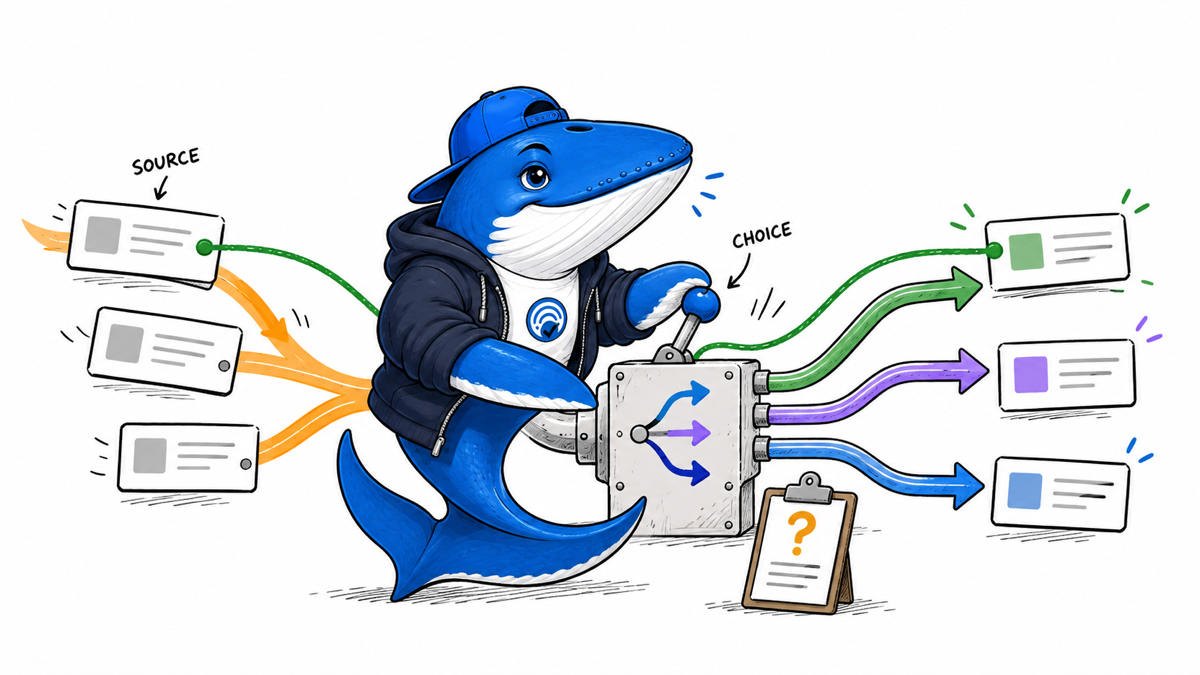
The UK Competition and Markets Authority has proposed search-choice rules that could let an AI assistant qualify for placement beside traditional search engines. The proposal is not a final order, and it does not name ChatGPT or any other assistant as approved. It does, however, define a route that a general-purpose AI service could use if it meets search, safety and attribution requirements.
The consultation targets Google because the CMA designated Google with strategic market status in general search and search advertising. If adopted, Google would have to show choice screens to UK users in Chrome and on new Android devices. The CMA announcement and the proposed conduct requirement make one publisher issue unusually explicit: generative answers would need clear attribution and direct access to the web sources they use.
Start with the boundary: this is a proposal, not a rollout
No UK choice screen has changed because of this consultation yet. The CMA is collecting responses until 5pm on October 9, 2026 and says it expects a final decision by the end of the year. The final wording can change, and a qualifying service would still need to apply through the process described in the proposal.
That distinction matters for publishers. “ChatGPT is coming to Android choice screens” overstates the evidence. A more accurate statement is that AI assistants are not excluded as a class, provided they function as general search services and satisfy the proposed eligibility rules.
How an AI assistant could qualify
| Test | What the proposal asks for | What remains unresolved |
|---|---|---|
| General search | The service must help users search broadly across the web, not only a narrow vertical or a closed content set. | The CMA would assess applications against the final requirement. |
| Web access | Results must provide access to information and destinations across the open web. | A conversational interface alone does not prove equivalent coverage. |
| Security and integrity | The service must meet operational safeguards and protect the choice-screen process from abuse. | The detailed evidence required from each provider is not yet public. |
| Source attribution | Generative summaries must clearly and accurately attribute web content and provide clear access to the source. | The proposal sets the outcome, not one universal citation design. |
The important change is conceptual. The choice is no longer framed only as one ranked-link search engine versus another. It can include an answer interface, but only if that interface still provides a reliable route back to the web.
Attribution becomes an eligibility condition
Most publisher-control debates begin after an AI product has already generated an answer. This proposal moves attribution earlier in the chain. A provider that wants choice-screen distribution would need to show that its summaries identify the source clearly and let the user reach it.
That does not guarantee traffic. A visible source can still receive few clicks, and a citation can support only a small part of an answer. Our publisher-control outcome framework separates access, use, attribution and referral because each is a different event. The CMA proposal reinforces the same separation: inclusion on a choice screen would depend partly on how the product connects generated material to its origins, not merely whether it can return an answer.
Publishers should watch three implementation details if the rule is adopted:
- whether a source is named at the claim, at the answer section or only in a collapsed list;
- whether the user can open the original page in one clear action;
- whether the displayed label resolves to the canonical source rather than an intermediary or rewritten URL.
Google would administer the screen, but not write the rule alone
The proposal gives Google an operational role. Google would receive provider applications, test eligibility and review participating services every six months. That can sound like a competitor controlling access, so the consultation also defines CMA oversight, required records and dispute routes.
For an approved service, the proposed experience includes a first-use choice screen and limited later prompts. It also contemplates a “test drive” so a user can try an alternative before making it the default. These details are designed to turn a formal option into a choice a person can actually evaluate.
The tension is real: Google would implement the gate, while the CMA would establish and supervise the obligation. The final requirement will need to be specific enough that approval does not depend on an opaque product comparison.
What publishers can audit now
No publisher needs to wait for the consultation outcome to inspect the source path. Select a fixed prompt set, capture the complete answer, record every displayed source and resolve each link to its final canonical URL. Then separate four observations: the brand was mentioned, the brand was recommended, a page was cited and a visit arrived. Our AI crawler guide covers the upstream access layer; the answer capture covers the downstream presentation layer.
A useful audit row includes the service, interface, account state, locale, prompt, answer text, visible source label, displayed URL, resolved URL, supported claim, capture time and repeat number. If the same prompt produces different source paths, preserve the failures and variants rather than reporting only the clean example.
The next decision points
- October 9: the consultation closes at 5pm UK time.
- By year end: the CMA expects to decide whether to impose the conduct requirement and in what form.
- After a final rule: eligible providers could apply, and Google would evaluate them under CMA supervision.
- During operation: participating services would face recurring eligibility reviews rather than permanent approval.
The proposal is therefore more than a browser-setting story. It is an attempt to define what counts as a search alternative when answers are synthesized, and it makes publisher attribution part of that definition. Whether any named AI assistant qualifies will depend on the final text and on evidence supplied through the application process.
Keep learning
Continue this topic
Next in this topic
ChatGPT and Gemini Shared No Source Domains in 76.7% of Product Checks
Earlier in this topic
What Perplexity’s Real-World Mistakes Experiment Actually Proved
AEO & AI Search
Ask a question or join the discussion