Perplexity Python Search SDK: What Is Open, What Is Compiled and How to Test It
Perplexity's Python Search SDK offers live web search, fan-out and snippets. This audit separates the open wrapper, compiled core and measurable retrieval output.
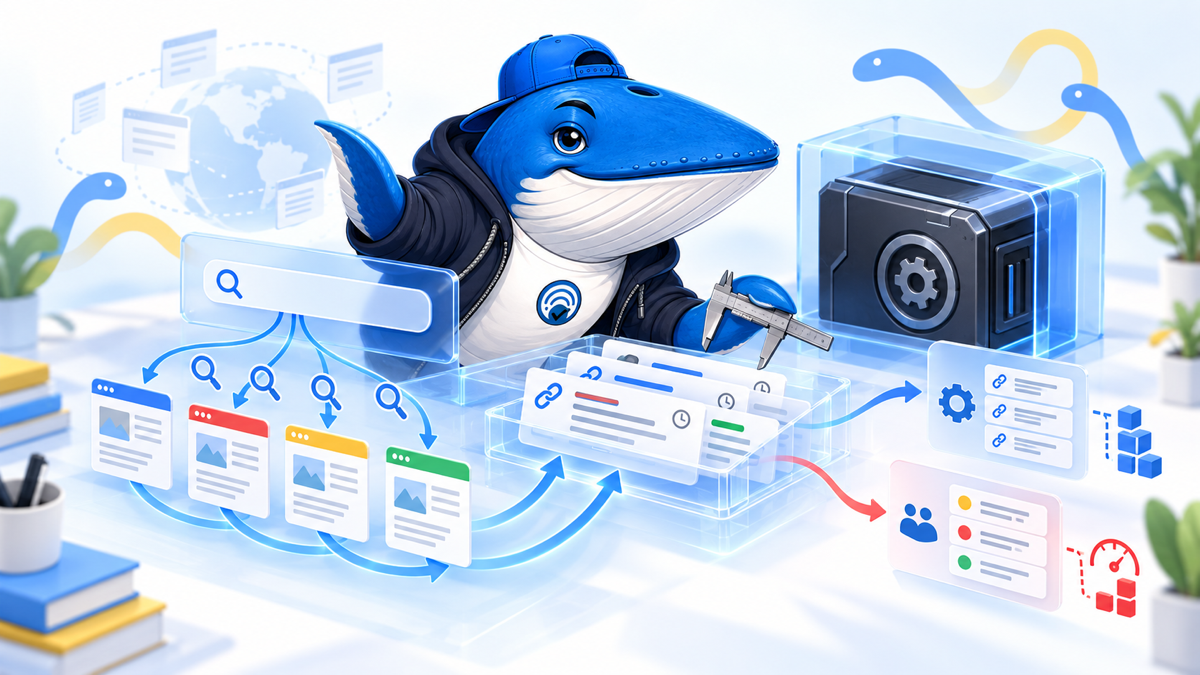
Perplexity has released a Python Search SDK for live web retrieval, query fan-out and structured result snippets. It is useful infrastructure for research tools, but the repository also draws an important boundary: the Python wrapper is open source while the search core is distributed as a compiled component.
Quick verdict
Use it when: you want programmatic web results inside a Python 3.12+ workflow and can evaluate the returned URLs, timestamps and snippets against your own task.
Do not use it as proof of: how Perplexity’s consumer answer product ranks sources, which pages receive citations or whether a publisher will gain referral traffic.
What the repository actually provides
The official Perplexity Search SDK repository describes package installation through pplx-srch-sdk, support for Python 3.12 and newer, and prebuilt targets for macOS and Linux on x86_64 and aarch64. The advertised capabilities include live web search, fan-out and result snippets.
The wrapper is licensed under Apache 2.0. The core is prebuilt rather than supplied as the same inspectable Python source. That does not make the SDK unusable. It changes what “open source” means for an audit: you can inspect and modify the integration layer, but not independently review the full retrieval implementation from the wrapper repository.
Evaluate it in three layers
Layer 1: the wrapper
Check installation, supported platforms, input validation, exceptions, serialization and license obligations. Pin a version and record the wheel hash used in production.
Layer 2: the result contract
Inspect which fields are returned for URL, title, snippet, timestamp and any score. Confirm how missing values appear. Store the raw response beside your normalized record so later SDK changes can be diagnosed.
Layer 3: retrieval quality for your task
Create a query set that reflects the work you will perform: fresh product documentation, local news, evergreen definitions, obscure technical errors and adversarially similar pages. Judge source quality and recency, not just whether a plausible snippet appears.
A practical test matrix
| Query type | What to record | Failure signal |
|---|---|---|
| Breaking change | Newest authoritative date and URL | Older secondary page outranks primary release |
| Technical documentation | Exact version and canonical domain | Stale or forked documentation dominates |
| Ambiguous entity | Interpretation chosen and alternatives | Results mix unrelated entities without warning |
| Long-tail error | Reproducible fix and source type | Snippet offers unsupported generic advice |
| Publisher monitoring | URL presence across repeated runs | One run is treated as a stable ranking |
Fan-out can improve coverage and multiply noise
Query fan-out is useful when one question contains several subproblems. It can also overweight repeated reporting, drift into adjacent intents and increase cost. Log the generated subqueries. Without that record, a result set may look comprehensive while hiding that three subqueries asked nearly the same thing.
What publishers can responsibly measure
A publisher can run a stable query set and record whether its URLs appear in the SDK’s results. That measures one API surface under defined conditions. It should not be labeled “Perplexity visibility” without qualification. Consumer answers can apply additional retrieval, ranking and generation steps.
For broader crawler and citation monitoring, combine the result ledger with the controls in our AI crawlers guide and keep API observations separate from referrals and citations.
Downloadable evaluation ledger
The ledger records query intent, run time, SDK version, subqueries, returned domains, authority, freshness, duplicates and reviewer judgment. Rows are marked as examples so they cannot be mistaken for completed results.
Download the Perplexity Search SDK evaluation ledger
Decision
The SDK is worth testing for teams that need a compact Python retrieval layer and are prepared to evaluate the output. The strongest reason to adopt it is the result workflow it enables, not the assumption that an official SDK reproduces the consumer search experience.
Primary sources
Perplexity, Python Search SDK repository and API platform developer resources, reviewed September 18, 2026.
Keep learning
Continue this topic
Earlier in this topic
Gemini Antigravity September Preview: Parser Changes Before October 5
Tools & Workflows
Ask a question or join the discussion