Gemini Antigravity September Preview: Parser Changes Before October 5
Google's September Antigravity preview replaces the May build. Local tool parsers need tests for PascalCase parameters and line-range edits before October 5.
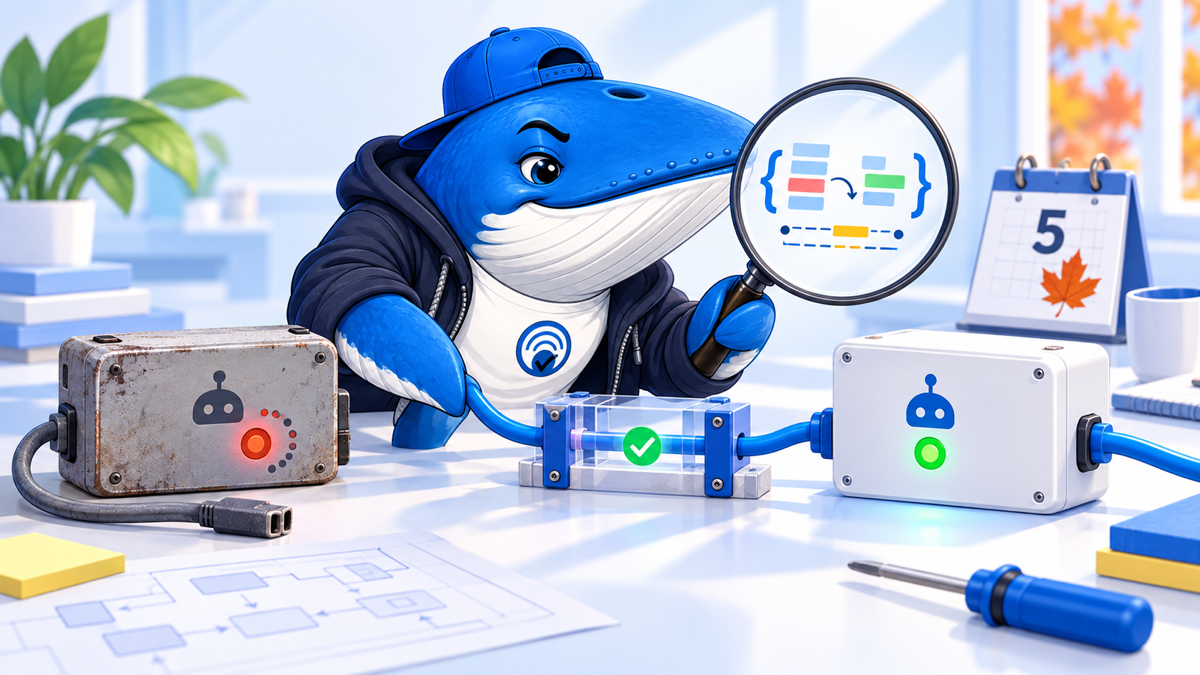
Google has replaced the May 2026 Gemini Antigravity preview with antigravity-preview-09-2026. The older preview is scheduled to shut down on October 5, 2026. A remote user who only reads the final answer may need little more than a model-string change. A local tool-call parser needs a real compatibility test.
The migration is a contract diff
| Integration pattern | Required work | Main risk |
|---|---|---|
| Remote agent, final output only | Update the agent or model identifier | Behavioral changes in completed answers |
| Local tool-call consumer | Update identifier and test the parser | PascalCase parameters and line-range edits |
| Stored fixtures or replay tests | Refresh fixtures while preserving old cases | Tests that accept only the previous shape |
| Production automation | Canary, observe, then roll out | Silent partial execution |
Two parser changes Google calls out
Google’s Gemini API changelog says local tool and function-call parsers must handle PascalCase parameters and line-range edits. These details are small enough to miss in a routine model swap and important enough to break a brittle integration.
A tolerant parser should validate the fields it needs, report unknown fields and preserve the raw event for debugging. Avoid silently lowercasing every key unless the tool contract explicitly allows it. Normalization can hide a malformed call or collapse two distinct names.
Minimum acceptance cases
- A tool call with the expected historical parameter casing.
- A tool call with PascalCase parameter names.
- An edit that addresses one line.
- An edit that addresses a line range.
- An unknown parameter that should be logged, not executed blindly.
- A malformed range that must fail safely.
Keep these cases in the test suite after migration. Preview agents change, but the failure modes become regression knowledge.
A cautious canary plan
Send a small, representative share of non-destructive work to the September preview. Record parse success, tool selection, rejected calls, edit accuracy and total completion. Compare outputs with the old preview while it is still available. If a task can alter production files, keep approval and diff review in place.
For SEO teams, good canary tasks include extracting headings from a saved fixture, editing a disposable content file and generating a crawl summary from static data. Do not begin with a live CMS change or a bulk redirect operation. Our SEO repository reference includes inspectable projects that can supply safer disposable fixtures than a production site.
This is not a Google Search ranking update
Antigravity is an agent integration in the Gemini API. The changelog does not say the migration changes Google Search, AI Overviews or AI Mode rankings. Treating an API preview update as a search-algorithm event would confuse two separate systems.
Log the boundary where failures become visible
A migration log should preserve the model identifier, tool name, raw arguments, parser version, validation result and execution outcome. Those fields tell different stories. A request can be accepted by the model and rejected by the parser. A parser can accept a call that the tool later refuses. An edit can execute successfully but change the wrong lines.
Count each stage separately. A single “agent success” percentage hides whether failures come from generation, parsing, validation or execution. For destructive tools, store a before-and-after diff and the approval identity. The purpose is not to retain unlimited prompt history. It is to make the tool boundary diagnosable.
Define a rollback trigger before the canary
Choose thresholds that match the workflow. A content extraction job may tolerate a small number of rejected records and retry them. A redirect editor should stop on the first unexplained range or target mismatch. Write the threshold, owner and fallback path before traffic moves so a deadline does not turn a cautious migration into an improvised one.
Deadline board
- Now: find old identifiers in code, configuration, documentation and saved fixtures.
- Before canary: add casing, range and malformed-call tests.
- Before October 5: move production traffic, verify alerts and document rollback.
- After migration: remove the old identifier only after logs show no remaining callers.
Download the compatibility fixture
The JSON fixture contains synthetic old-shape, PascalCase and line-range examples marked as examples. Use it to exercise your parser, then replace the example fields with the exact contract your integration accepts.
Download the Antigravity parser fixture
Primary documentation
Google, Gemini API changelog and Antigravity agent guide, reviewed September 18, 2026.
Keep learning
Continue this topic
Next in this topic
Perplexity Python Search SDK: What Is Open, What Is Compiled and How to Test It
Earlier in this topic
ChatGPT for Word: A Five-Gate Editorial Workflow for Publishers
Tools & Workflows
Ask a question or join the discussion