Google’s UGC Fresh Data Program Is Not a Shortcut for News Articles
Google’s new UGC documentation explains an approval-only pipeline for public community content. Here is how to decide whether your platform fits.
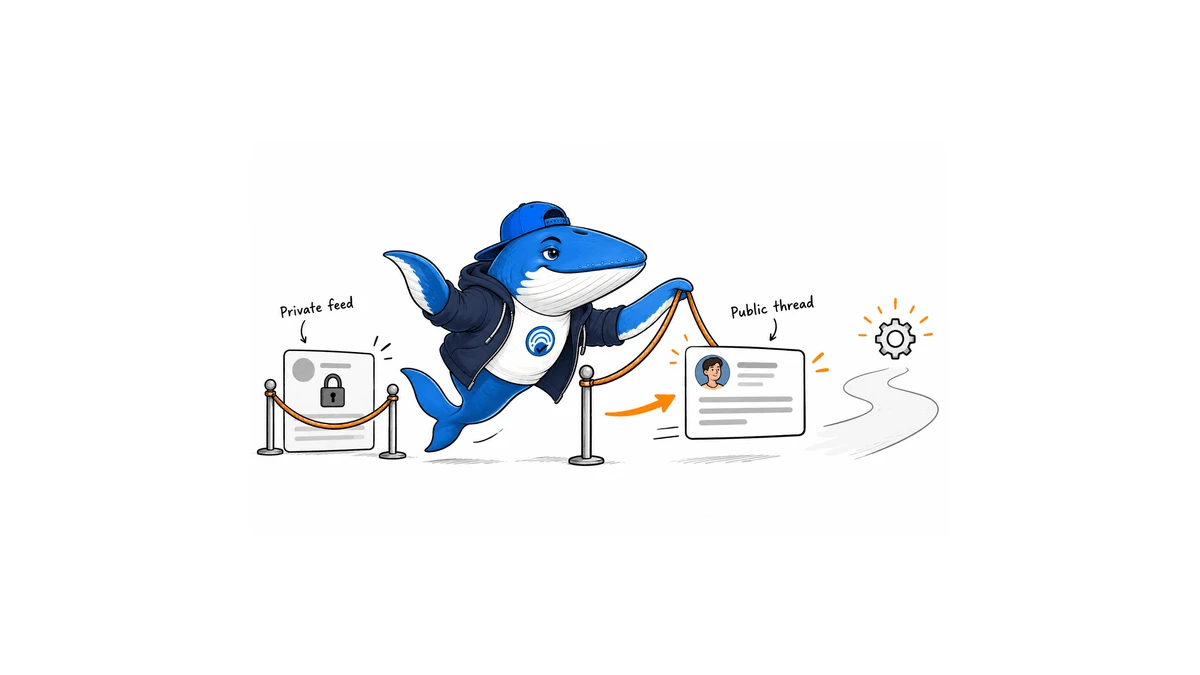
Google has documented a dedicated route for fresh community posts and their interaction signals. A publisher looking for faster indexing should first check whether it operates the kind of platform the route is designed for. A publisher-written news article is not independent user-generated content just because readers can comment on it.
Google’s documentation change log records the addition on October 8. The UGC Fresh Data Program is approval-only, separate from both the Indexing API and ordinary crawling, and offers no guarantee of appearance in Search. The documentation date should not be treated as proof of the program’s first launch.
Start with the page, not the API
Google describes eligible platforms as primarily hosting substantial volumes of independent users’ social posts or forum discussions. Submissions need dedicated stable public URLs, creator attribution linked to public profiles, and access for Googlebot and readers without a login or paywall. The public criteria do not specify a numeric audience threshold or a country list.
The first decision is therefore editorial and architectural. Ask who created the material and what URL a stranger can open to read it. A profile containing many unrelated updates is a different object from one discussion with its own permanent address. Turning a feed entry into a durable thread page may improve your platform’s architecture, but it does not establish acceptance into this program.
Three site models, three different decisions
An independent news publication
Consider a publication that produces its own reporting and has a comments box below each article. The reporting remains publisher-created content. Applying a forum schema type to the whole article would misdescribe it. Keep the newsroom’s main work on normal discovery paths and treat the comments as a separate community feature. A large comment count does not change authorship.
A public specialist forum
A forum with durable discussion pages, identifiable contributors, and active moderation fits the described content model more closely. Its remaining questions are volume, audience, and operational capacity. Before investing in integration, assemble representative URLs that demonstrate public access, authorship and moderation. Do not promise members that their posts will gain placement because an application was submitted.
A private group or member feed
A login-only community fails the public-access condition as described. Making selected posts public is a governance decision involving contributors, not a technical switch to flip for SEO. If public distribution is appropriate, create a genuinely public surface with clear contributor expectations. Keep private material out of the submission proposal.
The integration burden is a freshness commitment.
The published technical criteria include OAuth 2.0, validated JSON-LD, and suitable on-page markup such as SocialMediaPosting or DiscussionForumPosting with interaction statistics. Google asks for submissions ideally within minutes and engagement-counter updates within 72 hours of creation. Active moderation and a user reporting mechanism are also required.
That combination makes this an ongoing operations project. A platform needs to know which URL represents a post, who owns its public identity, when it was created, and which counters changed. If those fields disagree across the page and internal records, a faster delivery mechanism could transmit inconsistent information faster. Stabilize the source records before writing integration code.
Assign an owner for delivery failures, another for moderation escalations, and a named contact for the application. Those are our implementation priorities, not additional eligibility rules from Google. They help distinguish a platform that can maintain fresh submissions from one that can send a successful demo request.
What to do before applying
- Choose a small set of representative public discussion URLs and open them while signed out.
- Check that the contributor identity, creation time, and interaction fields refer to the same discussion.
- Document how reports are reviewed and how removed or restricted posts leave the public surface.
- Estimate the work needed to keep submissions and counters current, then assign ongoing ownership.
- Use the application linked from Google’s documentation. Wait for the private integration instructions instead of inventing a production payload from the public overview.
Google says applicants should receive a status response within six to eight weeks; that is an application response window, not a Search-placement deadline. For a publisher, the useful decision is to invest only if the underlying community product fits. Our community attribution analysis addresses a related but separate question: how a displayed perspective points back to its contributor. The broader AI SEO guide keeps discovery, inclusion, and traffic as separate outcomes.
Keep learning
Continue this topic
Earlier in this topic
Google Updates Its AI Content Guidance With Quality-Rater Checks
SEO
Ask a question or join the discussion