Google Tests Publisher Payments for Contributions to AI Answers
Google is testing payments when publisher content significantly contributes to AI answers. Here is what is confirmed, undisclosed and worth measuring.
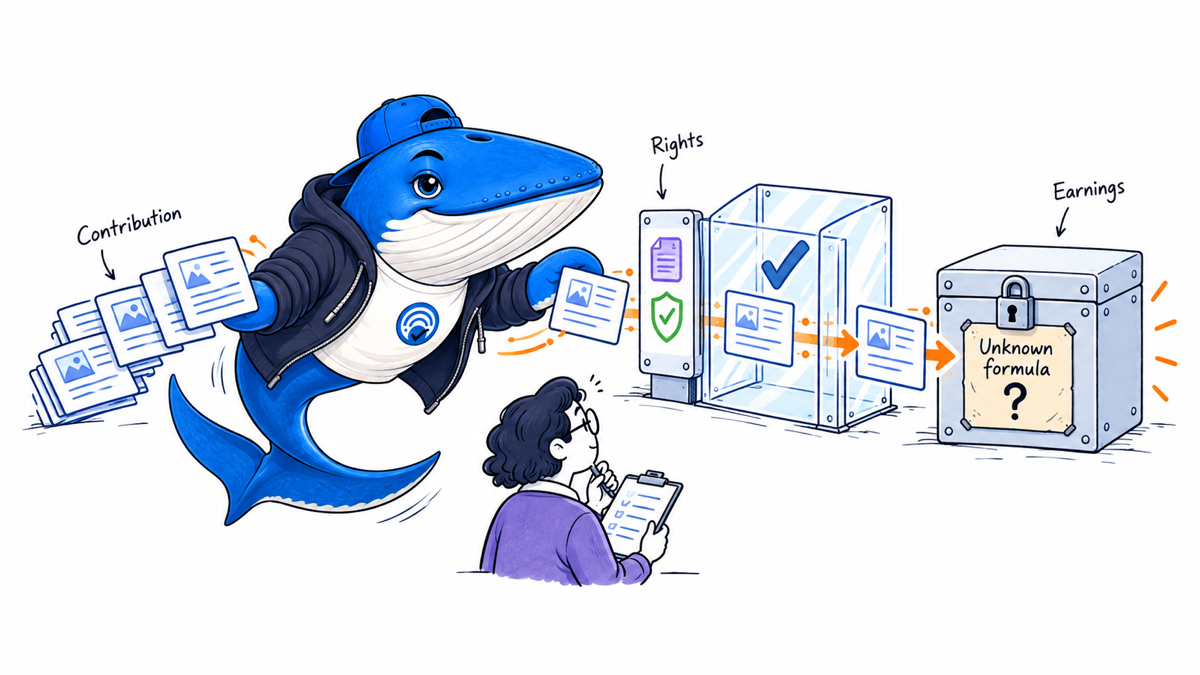
Google is testing a program that pays selected publishers when their work makes a significant contribution to an AI answer. That is a meaningful change in the publisher relationship, but it is not a public licensing market yet. The pilot has no disclosed payout formula, contribution threshold, application path or general launch date.
The practical answer: treat this as a contribution-accounting pilot, not a new revenue forecast. A publisher needs to know what Google measures, what rights the agreement grants and what the reporting omits before assigning value to the earnings number.
What is confirmed, and what remains hidden
Digiday reports that Google invited at least dozens of publishers into an early program and added an AI earnings panel to Search Console. The panel reportedly shows monthly history and payments when content makes a significant contribution to answers in Gemini, AI Overviews or AI Mode. Google confirmed to Digiday that it is learning through an early pilot.
| Question | What we know | What is still undisclosed |
|---|---|---|
| Who can participate? | Selected publishers have been invited. | No public application or complete eligibility rules. |
| What creates value? | Content that significantly contributes to supported AI answers. | No public definition of significant contribution. |
| Where can value occur? | Gemini, AI Overviews and AI Mode are named in the report. | No surface-by-surface weighting or query coverage. |
| How is payment calculated? | An earnings panel reportedly provides monthly history. | No rate card, denominator, minimum or adjustment policy. |
| What does Google receive? | A commercial arrangement exists for pilot participants. | Contract terms, reuse scope and exit consequences are not public. |
This matters because Google has also introduced controls that let eligible site owners limit some uses of their content in Search generative AI experiences. The control announcement and the reported payment pilot should be evaluated together: one changes permission, while the other begins to attach a financial signal to some contributions.
A citation is not the same event as a paid contribution
A visible source link is observable. A paid contribution is an internal classification. The two may overlap, but no public source establishes that every citation earns money or that every paid contribution produces a visible citation.
- Retrieval: the system finds a passage or document.
- Use: the system uses information from that source when composing an answer.
- Attribution: the interface may expose a link or source card.
- Contribution classification: Google decides whether the use meets the pilot’s payment condition.
- Accounting: the event is valued, adjusted and reported.
Publishers should ask for those stages separately. A monthly earnings total without contribution counts or answer-level examples cannot reveal whether revenue changed because of demand, coverage, classification or rate.
Build a contribution ledger before valuing the pilot
The useful unit is not simply revenue per page. A contribution ledger should preserve the connection between content, reuse and money without assuming that Search clicks and AI contribution payments share the same denominator.
| Field | Decision it supports |
|---|---|
| Eligible property and content set | Shows which inventory the agreement can use. |
| AI surface | Separates Gemini, AI Overviews and AI Mode if reporting permits it. |
| Contribution count or unit | Creates a denominator for the payment total. |
| Visible attribution count | Tests whether paid use and visible sourcing move together. |
| Referral sessions | Separates direct audience value from licensing value. |
| Gross earnings and adjustments | Exposes retroactive changes, thresholds and payment timing. |
| Rights and retention period | Defines what can continue after the publisher leaves the pilot. |
Seven questions to resolve before signing
- What exact event qualifies as a significant contribution?
- Can a publisher inspect examples behind the monthly total?
- Is payment based on use, answer exposure, user engagement or another unit?
- Are retrieval, citation and contribution reported separately?
- Which rights are exclusive, sublicensable or retained after termination?
- Can the publisher exclude sections, authors or licensed material?
- What happens to Search and AI visibility if the publisher declines or exits?
The answers determine whether this is incremental licensing revenue, compensation for a broad reuse right or merely an opaque bonus attached to an existing distribution relationship.
A clean 90-day measurement plan
Freeze the participating content set on day one. Export the Search Console earnings view on a fixed monthly date. Record visible citations and AI referrals independently. Log material editorial changes, removals and control changes. At the end of 90 days, compare four series: contribution events if available, earnings, visible attribution and qualified referral sessions.
If only the earnings total is available, label the result as revenue observed, not a rate. Do not divide it by ordinary Search impressions or clicks unless Google explicitly defines that relationship.
This pilot also changes how publishers should read Google’s broader Preferred Sources and identity features. Preference, attribution, referral and payment are separate mechanisms. A healthy publisher strategy should measure each one without treating any single surface as proof of the others.
The commercial signal is real; the market is not mature
Google is testing a direct financial relationship around AI-answer contributions. That is notable because it recognizes that answer generation can use publisher value even when a conventional visit does not occur. The open question is whether the pilot becomes transparent enough for publishers to price rights and compare outcomes. Until the accounting unit and contract boundaries are public, the responsible position is cautious participation with an independent ledger.
Evidence note: Operational details about the pilot are attributed to Digiday’s reporting and Google’s confirmation to that publication. Google’s site-owner control announcement is a primary source. No public payout formula or universal rollout was available when this analysis was prepared.
Keep learning
Continue this topic
Next in this topic
GPT-5.5 Retires From ChatGPT and Codex on October 14: Migration Checklist
Earlier in this topic
What Perplexity’s CobbleDB Reveals About AI Search Retrieval
AEO & AI Search
Ask a question or join the discussion