Gemini 4 Argon in AI Mode needs its own visibility-test baseline
Google’s subscriber model choice adds a comparison boundary. Record access, selected model and conversation state before interpreting citation changes.
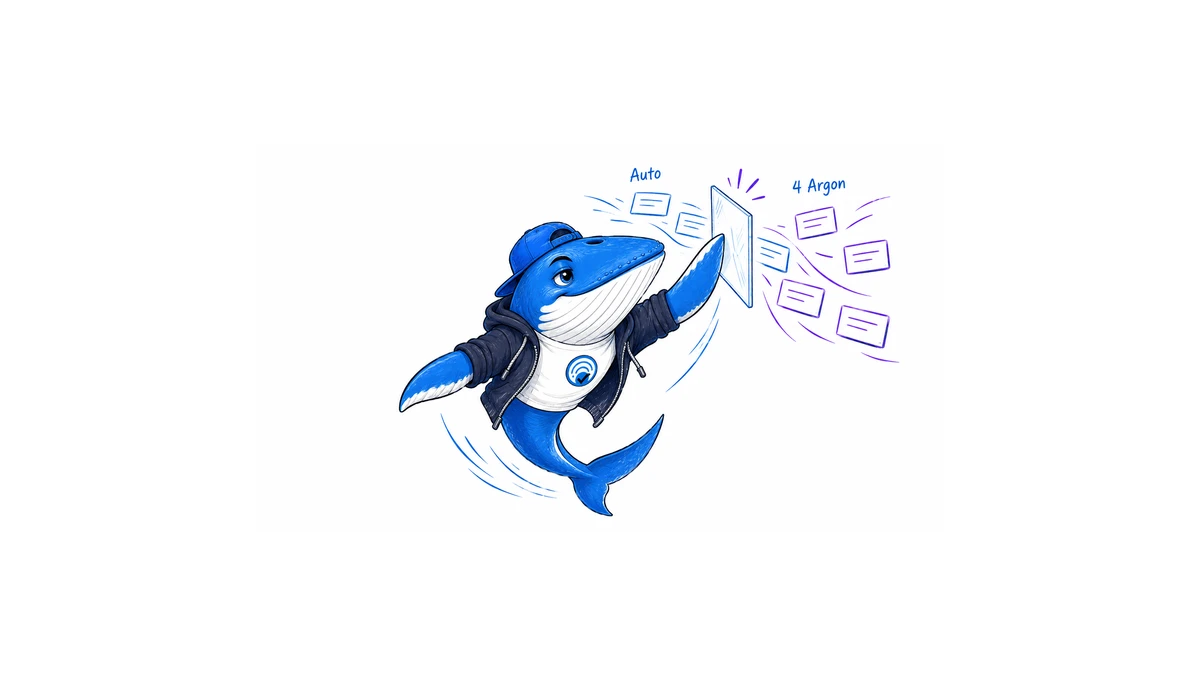
An AI Mode visibility result now needs a model label. Google announced Gemini 4 Argon access in Search on October 13 for Google AI Pro and Ultra subscribers. A run using that choice and a run using Auto can answer the same question under different conditions.
Check access before building a comparison
The launch announcement describes availability across several products. For a Search test, use the narrower AI Mode help page: Argon has a supported-country list, requires an eligible Pro or Ultra subscription and a self-managed personal Google Account, and is for users aged 18 or older. Daily limits apply. Record what the account actually exposes before promising a matched sample.
Google documents a 4 Argon choice in the menu in the Ask anything bar. Auto and Fast remain other choices. Product access in the Gemini app, the developer API, or Antigravity is not proof that a test ran in AI Mode. Keep the Search surface explicit in both the method and the report title.
Split the notebook at the model choice
The useful contribution is a small change to the observation record: make selected model and observed access state required fields. That prevents a later reviewer from treating a subscriber-only run as a change affecting every searcher.
| Record | Save | Why it changes the reading |
|---|---|---|
| Surface and choice | AI Mode; Auto, Fast or 4 Argon as shown | An app or API result belongs to another test. |
| Account context | Plan, supported market, age eligibility confirmed; no personal identifier | A missing selector can be an access limit. |
| Conversation state | Fresh conversation, personalization setting, prompt-family ID | Follow-up context can change the answer. |
| Outcome | Completed answer, errors, cited destination URLs, capture time | A capped or failed run must stay visible. |
Suppose a fictional three-run comparison produces different citations under Auto and 4 Argon. The result supports a description of those completed runs. It does not establish a permanent model preference for a domain, and it cannot separate model behavior from time, location, or personalization unless those conditions were controlled.
A test worth running has a stopping rule
- Choose a narrow reader task and write a few genuine paraphrases before collecting answers.
- Record the selected model for every run and save a redacted capture of that choice. Keep the market, language, and account setup consistent.
- Repeat the planned set under the other available choice. Keep failed and capped runs in the record rather than replacing them silently.
- Open the cited URLs and check whether each supports the nearby claim. Count appearances separately from supported citations.
- Stop at the planned sample and describe its scope. Start a fresh comparison when the model choice or eligibility changes.
The AI Mode fan-out guide helps turn subquestions into useful page coverage. The measurement crosswalk explains why a citation count and an analytics visit require different evidence. Neither source supplies a shortcut from a model announcement to a traffic forecast.
A launch is a reason to annotate the baseline
Google’s capability and benchmark claims do not establish which publishers gain clicks. SearchEngineAnswer has not run the paired prompt sample described here. Treat the launch as an annotation in the testing calendar, then collect a bounded comparison if the audience and reader task justify it.
Keep learning
Continue this topic
Earlier in this topic
OpenAI traced fake bylines pitching articles to real news outlets
AEO & AI Search
Ask a question or join the discussion