AdSense impression counting changes in 2027: how to prepare
Google will change banner impression counting from February 17, 2027. See how to compare counts and RPM without confusing measurement with earnings.
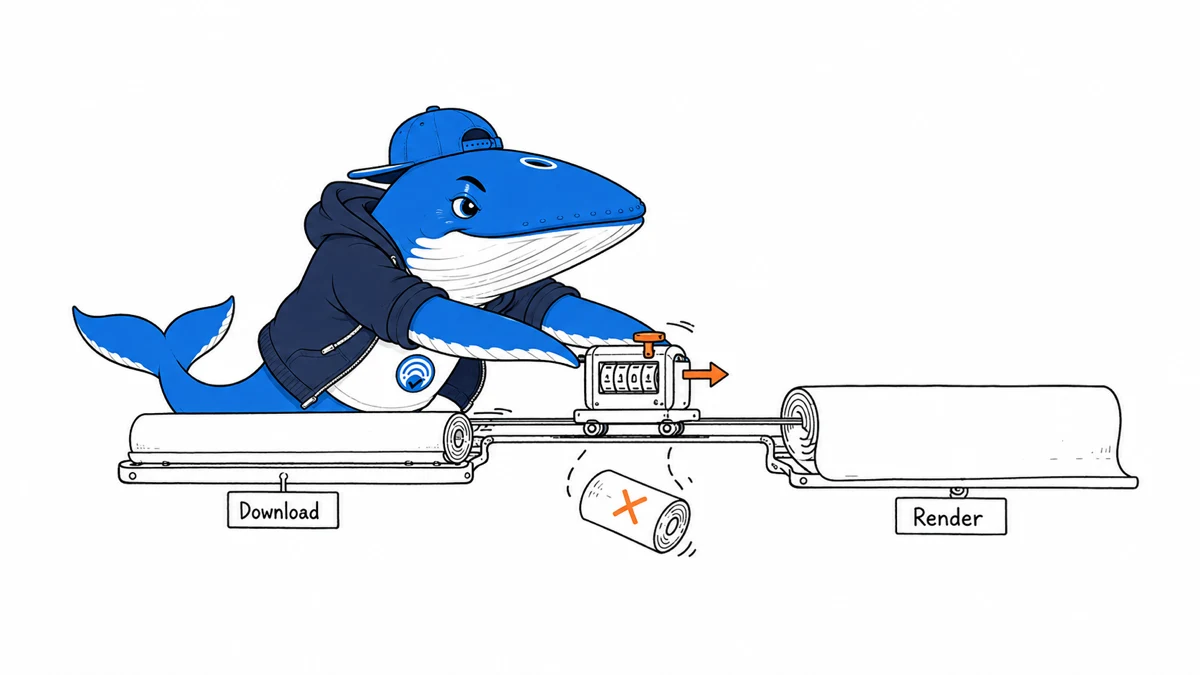
Google says AdSense and Ad Manager will begin changing banner-display impression counting on February 17, 2027. Publishers should prepare a measurement baseline before interpreting a future drop in impressions or rise in impression RPM as a business change.
What changes in February 2027
Google’s begin-to-render notice moves the counting point from the start of an ad download to successful loading and the start of rendering. The affected inventory is banner display on desktop web, mobile web, and connected TV. Native, app, and video inventory already uses or complies with begin-to-render measurement.
Google says the transition is automatic and impressions may decrease because counting happens later. It recommends Ad Manager comparisons using Ad server impressions and Ad server begin to render impressions, with a historical start date after August 12, 2026. Additional aggregate BTR metrics are described as forthcoming, not all available today.
This is an announced future change. SearchEngineAnswer has not measured its effect on publisher revenue.
A higher RPM can come from a smaller denominator
Here is an illustrative example, not a forecast. A publisher earns $100 from 50,000 counted ad impressions. Impression RPM is $100 divided by 50,000, multiplied by 1,000: $2.00.
If the same $100 is divided by 40,000 impressions under a different counting rule, impression RPM becomes $2.50. That is a 25% increase in the ratio without an extra dollar of earnings. The impression count is 20% lower. The percentage changes differ because their denominators differ.
Write the formula beside the chart. Do not substitute page views for ad impressions: page RPM answers a different question. A report that labels both simply “RPM” invites the wrong conclusion during a measurement transition.
Keep counting, viewability, and earnings separate
| Question | Evidence to retain | Avoid inferring |
|---|---|---|
| Was an impression counted? | Named metric and counting method | That a person saw it |
| Was it viewable? | Dedicated viewability measure and definition | That it generated a sale |
| Did earnings change? | Comparable earnings, traffic, inventory, and period | That a higher ratio means more money |
Beginning to render does not by itself establish that the placement was visible to the reader. Equally, an ad-server browser event is not a substitute for the platform’s finalized reporting. Keep those records linked, but do not merge them into one success count.
Prepare a baseline without changing the site
Choose a stable reporting window and document timezone, currency, inventory scope, and filters. Export the available comparable metrics. Keep desktop and mobile rows separate initially so a change in device mix cannot masquerade as a change in rendering.
Download the impression-counting baseline worksheet (CSV). The two worked rows are synthetic and marked EXAMPLE-REMOVE. They demonstrate denominator arithmetic only. Replace them with reports from your own account; leave unavailable metrics blank rather than estimating them.
Save the original export separately from the calculation sheet. Record the report-generation time as well as the dates covered. That makes later reconciliations possible if reporting values are revised.
Investigate the gap before changing ad loading
When a difference appears, first ask whether the two columns cover the same inventory and period. Then isolate which placements, devices, or creatives account for most of the absolute difference. A 50% gap on a tiny placement can matter less commercially than a 5% gap on the largest one.
For a suspect placement, capture a normal page load and check whether the reader can continue using the page comfortably. Record failed requests, missing creative content, and visible instability. Treat an early departure as an observation, not proof that the creative caused it.
Avoid making the page heavier merely to make a counting metric look better. Test one loading change at a time on a controlled page and compare user experience as well as reporting. A change that increases counted inventory while frustrating readers is not automatically an improvement.
Do not mix this with September’s bfcache change
The separate Google Publisher Tag bfcache refresh announcement concerns what happens when a reader returns to a cached page. It has a different effective date and mechanism. One concerns a refresh trigger; the other concerns the counting point.
Annotate each event separately in your reporting calendar. Keep traffic, ad requests, counted impressions, viewability, and earnings in distinct columns. Use our site-audit sequence when ad changes also affect page stability or loading.
Source checked September 4, 2026. The worksheet and arithmetic are SearchEngineAnswer’s explanatory contribution, not a publisher benchmark or a revenue forecast.
Keep learning
Continue this topic
Next in this topic
ChatGPT custom audiences: why uploaded rows are not matched users
Earlier in this topic
OpenAI 429 vs 503 Errors: Retry Without Skewing Your Data
Tools & Workflows
Ask a question or join the discussion