Nozzle’s SERP study gives publishers a reason to verify rank-tracker drops
The vendor reports temporary anomalies in collected Google results. Compare the collection with other evidence before treating a drop as a page defect.
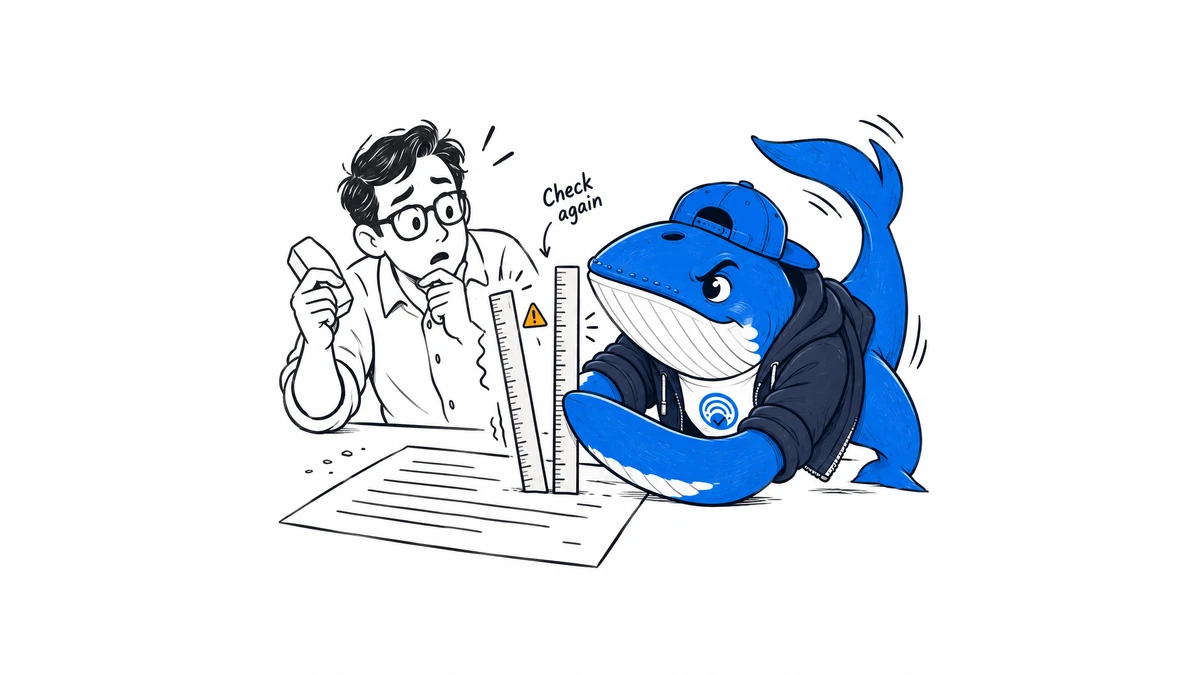
A sudden rank-tracker drop should trigger a measurement check before a page rewrite. Nozzle’s October 10 study describes normal-looking Google result pages in its collection that temporarily lacked many of the sites usually present for the same keywords. The vendor calls these results “poisoned.”
That label describes Nozzle’s classification and explanation. The study does not give publishers independent confirmation of Google’s intent, and its measured share is not a percentage of every search performed by Google users.
What the vendor actually measured
The original study covers 27.5 million collected result pages across 49 countries, desktop, iPhone and Android, from August 20 to October 9. Nozzle identifies usual sites using a historical top-ten baseline, then classifies departures partly through their later return. Its 8.0% headline concerns judged results after September 13; the full collection and that subset have different denominators.
This method matters because the recovery rule uses later observations. It can describe a pattern retrospectively, but it is not an instant diagnosis from a single screenshot. Nozzle supplies chart-data downloads; SearchEngineAnswer has not recomputed those aggregates or independently repeated the collection.
Two explanations can require opposite actions
Imagine a fictional tracker alert showing a guide dropping out of the first page. A collection problem could make rewriting that guide wasted work. A real decline could require an investigation into indexing, competition, or the page’s usefulness. A single alarming point cannot choose between those explanations.
Nozzle attributes the pattern to Google’s response to AI scraping. Treat that causal explanation as the vendor’s interpretation. Collection route, location handling, anti-automation behavior, and ordinary result variation remain factors to examine. The vendor operates a rank-tracking product and has a commercial interest in explaining discrepancies in the rankings it collects.
Build a matched evidence packet
| Evidence | Match or record | What it can resolve |
|---|---|---|
| Tracker observation | Keyword, timestamp, country, device, target location, provider and stored result | Whether the collector returned a plausible result for its declared setup. |
| Manual observation | Same query and approximate market/device; sign-in state and time | A second view of results under stated conditions. It is not an exact replay. |
| Search Console | Matching query, page, country, device and comparable complete dates | Whether recorded visibility or clicks also moved in that scope. |
| Page delivery | HTTP response, canonical, index directives and recent deployment | Whether a site-side change plausibly affected discovery. |
Search Console aggregates observations and can omit query rows. A stable daily total does not prove that every individual position remained stable, and a manual search at another time cannot reproduce the original request. Use agreement and disagreement to narrow the investigation rather than declaring one instrument infallible.
Decide what deserves a content change
- Preserve the suspicious result and ask the tracker provider what it can establish about that collection.
- Check for an independent site-side failure before editing copy. A broken response or incorrect index directive deserves its own fix.
- Compare several observations under recorded conditions. Preserve contradictory results and collection errors.
- Change the article when the evidence identifies a reader or page problem, then record the edit as a separate event.
Use the technical SEO checks for delivery failures and the small-experiment method when a content change has a testable hypothesis. If the only evidence is one anomalous tracker reading, the justified next step is another measurement.
Keep learning
Ask a question or join the discussion