Exa Places Adds Business Data: Verify the Branch Before the Hours
Exa reports 211 million places with structured business fields. A local-data audit should resolve the branch and conflicting hours before recommending a visit.
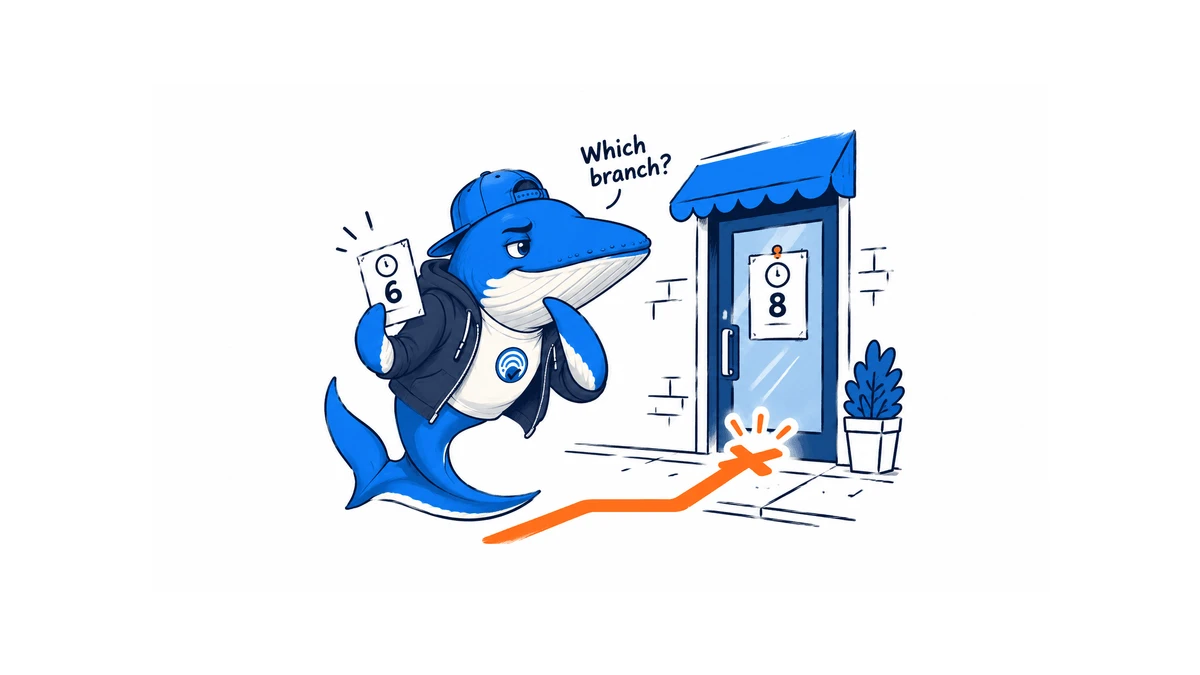
An assistant recommending a shop open tonight needs more than a plausible business name. It needs the correct branch, a current operating status, and hours applicable to the requested date. Exa’s new Places data makes those fields easier for agents to consume, but a structured answer still needs verification, since getting it wrong could send someone to the wrong place.
In its October 5 announcement, Exa reports adding 211 million places worldwide across its endpoints at no additional Places charge. Listed fields include business names, categories, addresses, coordinates, operating status, hours, phone numbers, websites, and ratings. The total is Exa’s claim, not an independently verified count of complete records across all countries.
Resolve identity before measuring a discrepancy
Start with a fictional business, Harbor Books, which has two branches. A returned record says it closes at 8 p.m.; a website page says 6 p.m. Before calling either source stale, compare the address, coordinates, branch name, and website destination. Two correct records for different branches can appear as a single incorrect record when the audit matches on name alone.
If both refer to the same branch, check the date and the kind of hours. Regular hours, holiday hours, and a temporary closure can all be valid in different contexts. Do not average 6 p.m. and 8 p.m. into a new 7 p.m. closing time. The disagreement is a reason to seek a more specific record or qualify the recommendation.
Attach evidence to the field
An address and a phone number can have different freshness histories. Saving one timestamp for the whole business hides that distinction. For a small audit, attach the returned value, official-page value, retrieval time, and any displayed effective date to each important field.
- Identity: Does the record refer to the intended branch rather than the parent business?
- Hours: Are these regular hours or an exception for the requested day?
- Website: Does the destination belong to the business and resolve to the relevant location?
- Phone: Is it a branch number, central switchboard, or an unrelated record?
- Status: Is a temporary closure distinguishable from a permanent one?
Mark a field unknown when you cannot settle it. Missing evidence is not the same as a verified mismatch. A business-owned page is a useful source, but if it has no effective date or is internally inconsistent, report that limitation instead of treating ownership as proof of current accuracy. For an immediate visit, a direct confirmation may be more useful than another directory result.
The vendor benchmark answers a narrower question
Exa also describes a 400-query evaluation using F1 for businesses returned with correct metadata. That is a vendor-run retrieval evaluation. It is not a test of this publisher’s local-business sample, proof of Google Maps ranking, or evidence that every returned hour is current.
A useful buyer comparison would hold the business sample, query wording, geography, and evaluation date constant. It would publish identity errors separately from field errors. Returning the wrong branch, even with impeccable metadata, should not be counted as a successful answer to a request about another branch.
How local publishers can use the change
For a local guide or directory, use structured data to locate candidates, then verify the fields your recommendation depends on. A “best places” article needs editorial reasons for inclusion; a business dataset does not supply your judgment. A route planner needs current practical details; a high rating does not settle opening hours.
Our local recommendation comparison separates source discovery from the final recommendation. The benchmark explainer shows why finding the right set and completing every record are different evaluation jobs. This report describes the announced capability and a review method; no independent Places API accuracy test has been completed here.
Keep learning
Continue this topic
Next in this topic
OpenAI traced fake bylines pitching articles to real news outlets
Earlier in this topic
ChatGPT’s Interactive Answers Change the Publisher Link Audit
AEO & AI Search
Ask a question or join the discussion