ChatGPT Sends Outbound Clicks in 5.2% of Sessions—But That Is Not a CTR
A 2026 U.S. desktop study separates ChatGPT’s session-level outbound-click rate from an estimated 9.4% reduction in traditional search use.
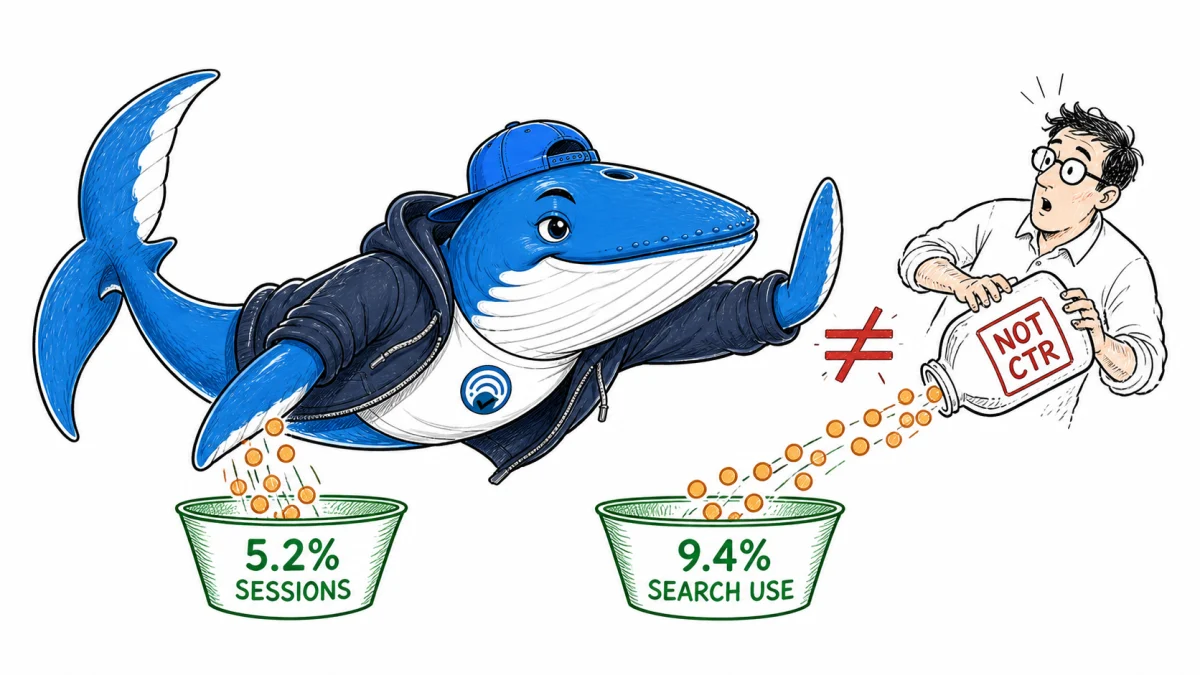
Direct answer: a 2026 U.S. desktop clickstream paper reports that ChatGPT produced an outbound click in 5.2% of conversation sessions. It also estimates that wider access to ChatGPT Search reduced traditional search use by 9.4%. The first is a session-level outbound-click rate; the second is a displacement estimate. Neither is a universal ChatGPT CTR.
The study’s bigger point is structural: AI answers can satisfy a task inside the intermediary, while the smaller outbound stream also changes which destinations receive attention.
Keep the two numbers separate
| Number | Denominator or comparison | Interpretation |
|---|---|---|
| 5.2% | Observed ChatGPT conversation sessions | Share producing an outbound click |
| 9.4% | Traditional search use around access expansions | Estimated reduction associated with wider ChatGPT Search access |
A marketing CTR normally divides clicks by impressions or eligible exposures. The paper’s 5.2% divides clicking sessions by conversation sessions. One session can contain multiple turns, no visible source opportunity, or a task that never needed the web. Calling it CTR erases the behavior the researchers measured.
The 9.4% estimate comes from exploiting expansions in ChatGPT Search access. It concerns substitution away from traditional search, with the largest search-referral losses in informational categories. It is not “ChatGPT stole 9.4% of every site’s traffic.”
The outbound stream is different, not only smaller
The authors report that ChatGPT’s remaining clicks skewed toward specialized destinations and away from ad-supported sites. That means a publisher cannot model the channel by shrinking a Google traffic curve. The query mix, source selection, session structure and user motivation differ.
For publishers, the useful questions are page-level:
- Which landing pages actually receive identifiable AI referrals?
- Which topics gain direct, assisted or branded visits?
- Do AI-referred visitors return, subscribe or complete a task?
- Which high-value informational tasks are increasingly satisfied without a click?
- Which pages offer a tool, dataset, workflow or community that an answer cannot contain?
This connects with our platform-tailwind control for ChatGPT referral growth: raw channel growth can move while page-level opportunity and causation remain unclear.
Build a publisher measurement stack
- Server requests: preserve referrer, landing URL, timestamp and user agent with privacy controls.
- Analytics sessions: create a transparent channel grouping and keep the raw source/medium.
- Page cohorts: compare exposed topics with similar pages rather than the whole site.
- Outcomes: record newsletter signups, tool use, downloads and return visits.
- Answer observations: save prompts, interface, citations, date and account state separately from referral logs.
Zeros matter. A page can be cited and receive no visit; a page can receive a visit without appearing in your monitored prompt set. Preserve both cases. The 30-day AI visibility score test provides a protocol for matching observations to referrals without pretending the sample is complete.
What the paper does not establish
The data is Comscore U.S. desktop URL-level clickstream. Mobile, other countries, later product versions, private browsing and unobserved cross-device behavior can differ. “Conversation session” is a study unit, not a standardized industry impression. The paper does not supply a universal forecast for an individual publisher.
Use the findings as a reason to audit the referral bargain and build first-party value—not as a reason to multiply site traffic by 5.2%.
Primary source
Shi, Zhu and Gu: Answering Without Referring—How AI Search Rewrites the Web’s Economic Bargain.
Status: preprint submitted July 8, 2026. Findings and definitions may change through review.
Ask a question or join the discussion