Google Ads vs Maps: Local Lead Attribution
Reconcile Ads, Business Profile, tagged website, call-tracking, and booking records before crediting a local lead spike to the wrong channel.
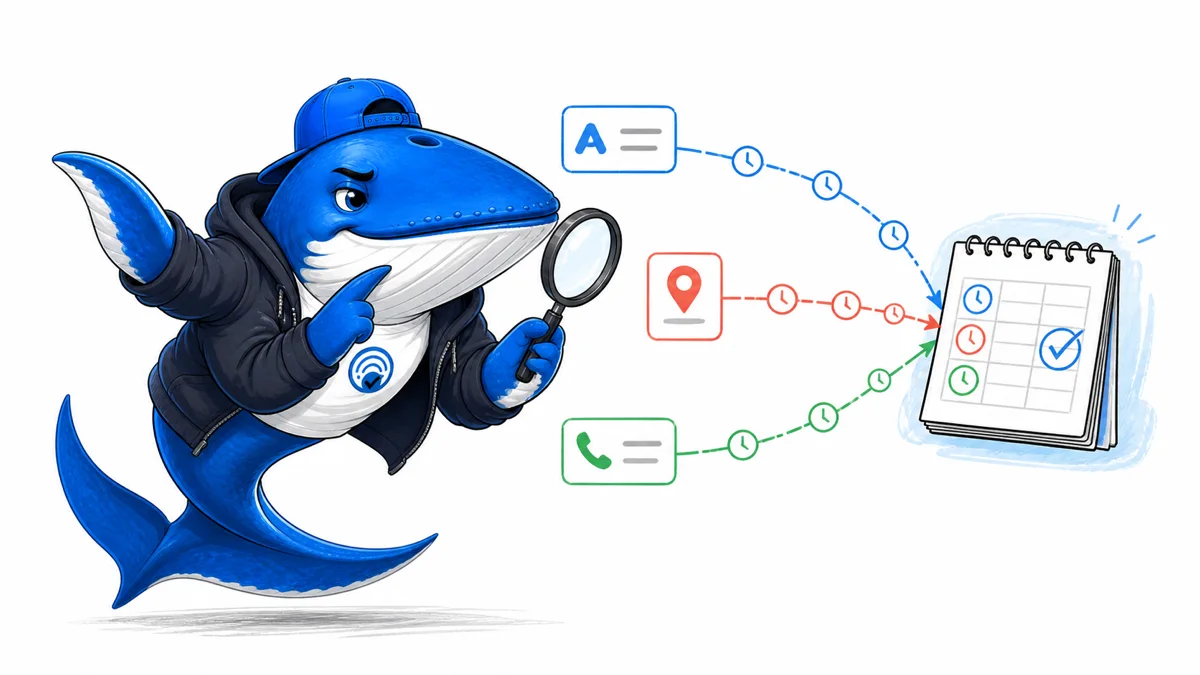
Do not credit a lead spike to the channel with the loudest dashboard
If calls and bookings rise while Google Ads clicks and spend stay flat, Google Maps or a Google Business Profile may be contributing—but that pattern alone does not prove it. Reconcile ad interactions, Business Profile actions, tagged website visits, call-tracking records, bookings, and demand changes in one daily ledger.
The goal is not perfect person-level tracking. It is a defensible explanation of what is directly observed, what is attributed by a platform, and what remains unknown.
Why the dashboards can tell different stories
A current r/localseo question describes exactly this problem: more calls and conversions without a matching increase in ad clicks or spend. That observation is a lead, not a diagnosis.
| Evidence | What it can show | What it cannot prove alone |
|---|---|---|
| Google Ads | Ad interactions, configured conversions, call assets, and campaign attribution. | Every organic Maps interaction or every offline booking. |
| Business Profile | Profile calls, website clicks, directions, and other available performance actions. | That an action produced revenue or was incremental. |
| GA4 | Tagged sessions, traffic-source dimensions, and configured events. | Calls that never visit the website or the complete customer journey. |
| Call tracking | Number dialed, time, duration, recording or disposition when lawfully configured. | True acquisition source when numbers are reused or pools are too small. |
| CRM or booking system | Qualified lead, appointment, sale, value, cancellation, and staff notes. | Source unless the capture process is reliable. |
Build one daily attribution ledger
Create one row per day and retain the same timezone across systems. Add the following fields:
- Google Ads spend, clicks, calls, conversion actions, and campaign changes.
- Business Profile calls, website clicks, directions, messages, and profile edits.
- GA4 sessions and leads from the tagged Business Profile URL.
- Call-tracking total calls, unique callers, qualified calls, missed calls, and source number.
- CRM or booking totals, qualified leads, appointments, sales, cancellations, and revenue where appropriate.
- Branded and non-branded demand, seasonality, promotions, outages, staffing, and local-rank observations.
Google’s URL campaign guidance documents UTM parameters. Use a stable tagged website URL for the Business Profile—for example, a source identifying Google, a medium identifying organic or business-profile traffic, and a campaign identifying the listing. Do not rename the parameters weekly; continuity is more valuable than clever labels.
Reconcile in this order
1. Check instrumentation before interpreting movement
Confirm call forwarding, conversion definitions, booking integrations, consent mode, tagging, timezones, and number pools. A new receptionist, missed-call rule, or conversion import can create a sudden reporting shift with no demand change.
2. Separate direct profile actions from website journeys
A call from the Business Profile may never create a website session. A Maps user can also click through to the site and later call. Report these as different observed paths rather than forcing them into one “organic lead” total.
3. Match platform counts to operational records
For each day, compare platform calls with actual answered calls and qualified outcomes. A spike in clicks with flat qualified appointments is not the same business result as a spike in booked work.
4. Look for competing causes
Check promotions, local events, press, reviews, seasonality, competitor closures, branded demand, and ranking changes. A simultaneous movement is not automatically the cause.
What the pattern supports—and what it does not
| Observed pattern | Reasonable interpretation | Next check |
|---|---|---|
| Ads flat; profile calls and qualified calls rise | Business Profile is a plausible contributor. | Call numbers, timestamps, branded demand, and booking records. |
| Profile clicks rise; tagged GA4 leads rise | More website journeys are associated with the listing. | Landing pages, duplicate UTMs, and conversion quality. |
| All platforms flat; bookings rise | Offline, referral, direct, measurement, or conversion-process change is plausible. | CRM source capture, promotions, staff, and phone logs. |
| Platform conversions rise; operations do not | Tracking or lead-quality change is plausible. | Conversion definition and duplicate events. |
Call tracking needs a privacy and quality review
Call recording, dynamic number insertion, and customer-source capture can be regulated. Obtain appropriate consent, limit access, document retention, and avoid collecting sensitive information you do not need. Clinics and other regulated organizations should involve their privacy or legal owner before recording or joining call data.
Google Analytics’ traffic-source documentation explains dimensions used to describe acquisition. Those dimensions are measurement constructs, not a promise that every real-world lead has one knowable source.
Sources and method
We used the community question to identify the reader problem and Google’s Analytics documentation for campaign and traffic-source definitions. The ledger is our synthesis for reconciling platform and first-party evidence. It does not assert that Google Maps caused the reported lead spike.
Keep learning
Continue this topic
Next in this topic
Google’s New /goto SERP Links: What Changed—and What Did Not
Earlier in this topic
How to Verify GPTBot and Other AI Crawlers
SEO
Ask a question or join the discussion