You.com Removed the authors Field: Keep Attribution Pipelines Stable
Make author metadata optional, preserve source identity, and test downstream attribution systems after You.com removed the authors field from v1 and Answer API results.
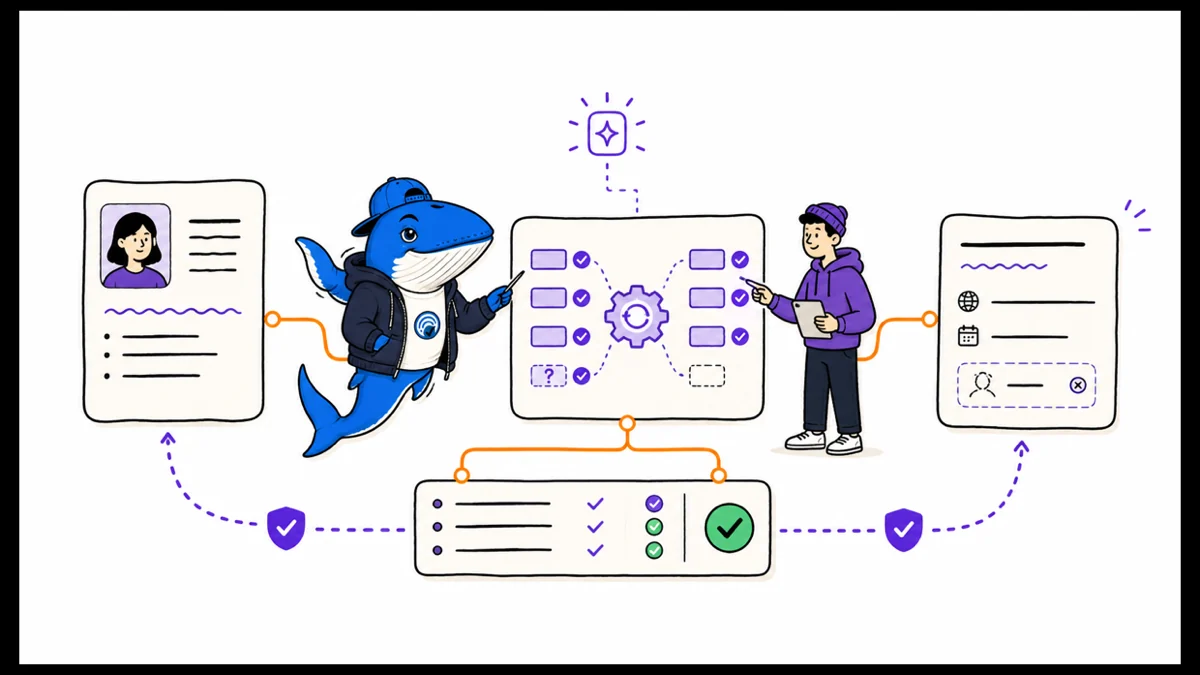
Published August 9, 2026: You.com removed the authors field from Web Search API v1 search results and from Answer API source results on July 15, 2026. The field was removed from the response schemas and documentation; the legacy v0 Search API was not affected because it did not include the field.
This is a small schema change with a large lesson. Attribution pipelines should not fail because one provider stops returning one optional enrichment field. Preserve the source URL and title, make author data nullable, and distinguish provider metadata from author information verified on the source page.
Find the breaking assumptions
Search the codebase, database schema, serializers, templates, exports, analytics, and tests for authors. The most fragile patterns are required array access, non-null database columns, joins that expect at least one author, and display components that suppress a source card when attribution is absent.
Also inspect derived data. A pipeline may convert authors into entity tables, trust scores, deduplication keys, bylines, filters, or report dimensions. Removing the visible field from one interface does not repair those downstream assumptions.
Check alerting as well. A monitor that treats a missing optional field as a provider outage can create false incidents, while a permissive parser can quietly discard the rest of a malformed source object. Contract tests should distinguish an expected field removal from a genuinely invalid response.
Use a resilient source model
| Field | Requirement | Fallback |
|---|---|---|
| provider | Required | Adapter identity |
| source_url | Required when supplied | Do not invent |
| title | Nullable | Host or “Untitled source” in UI |
| authors | Optional list | Empty list plus provenance status |
| published_at | Nullable | Unknown, not request time |
| raw_payload | Retained for audit | Versioned storage policy |
Represent absence explicitly. An empty author list can mean the provider no longer supplies the field; it does not mean the source has no author. Add fields such as author_status and author_origin if attribution quality affects a decision.
Do not replace the field with unbounded scraping
Fetching every cited URL to recover a byline changes cost, latency, privacy, terms, and failure behavior. It can also produce false attribution when a page lists editors, reviewers, organizations, or unrelated people. Make enrichment a separate, observable process with a defined purpose.
When author identity matters, prefer explicit page metadata and visible bylines, record where the value came from, and keep provider-supplied attribution distinct from publisher-verified attribution. When author identity does not change the user decision, showing the source title and domain may be sufficient.
The evidence-led publishing guide applies the same rule to article claims: unknown should remain unknown until a source supports it.
A migration test plan
- Save pre-change fixtures that contain one or more authors.
- Add current v1 and Answer API fixtures without the field.
- Confirm parsing succeeds when
authorsis missing, null, or empty. - Verify source cards still show title, URL, and date where available.
- Check exports, analytics, search indexes, and entity tables.
- Mark attribution as unavailable rather than fabricating a value.
- Monitor the provider changelog and version the adapter.
Run contract tests at the provider boundary and domain-model tests at the application boundary. The application should not need a hotfix every time a provider removes an optional field. The same normalized-source approach supports the Perplexity citation migration.
Ask a question or join the discussion