Cloudflare Web Search API Makes Crawler Rules Part of the Contract
Cloudflare's Web Search API requires provider crawler identity, robots.txt compliance and source links. Here is what publishers and AI teams can verify.
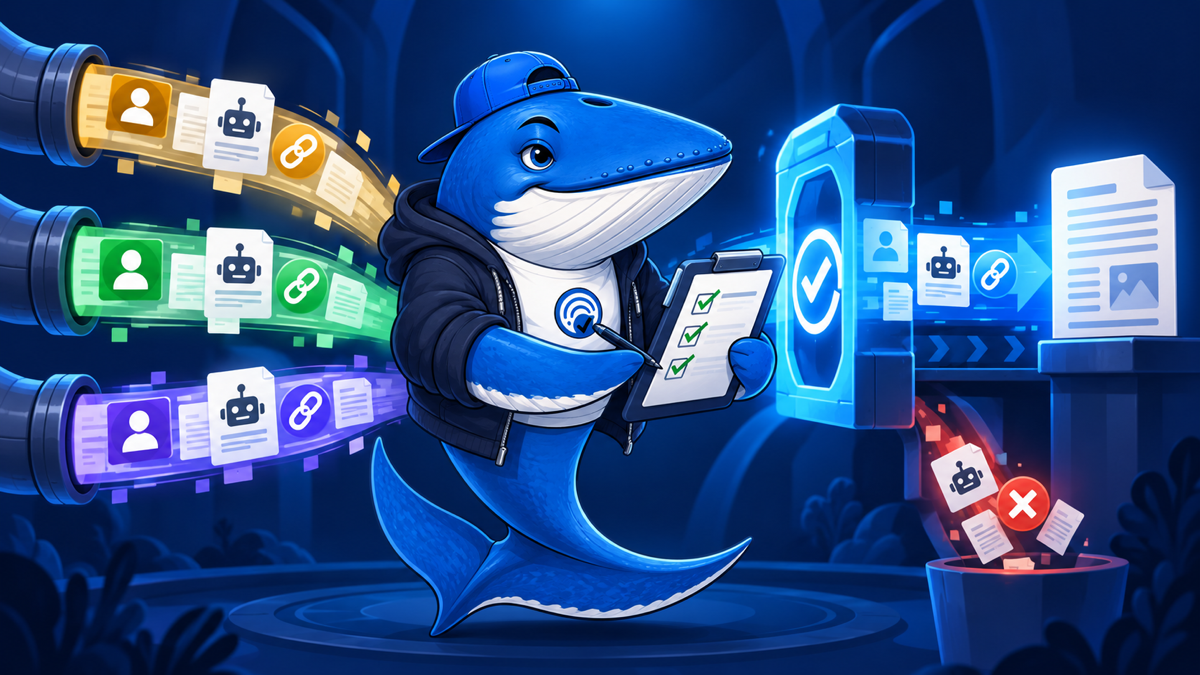
Cloudflare launched a Web Search API on October 2, 2026, with an unusual product requirement: search providers must identify their crawlers and respect publishers’ robots.txt rules, and return links to the sources behind their results. The first providers are Ceramic.ai, Exa, and Linkup. Developers reach them through Cloudflare AI Gateway rather than integrating three separate search endpoints.
This is useful infrastructure news, but it is not proof that publishers will receive more referrals or citations. The real change is contractual and operational. Crawler identity, publisher controls, source links, request logging, and provider choice are being placed in one auditable path.
The contract is the product difference.
Search APIs usually compete on index size, latency, freshness, and retrieval quality. Cloudflare adds a publisher-facing condition to that list. Its announcement says participating search providers must meet Cloudflare’s Verified Bot standards, follow robots.txtand supply source links with results.
| Layer | Cloudflare states | Evidence a team should retain | Not established by launch |
|---|---|---|---|
| Crawler identity | Providers must meet Verified Bot standards | Verified user agent, published IP or identity method, server-log sample | Every crawl is correctly classified by every firewall |
| Publisher rules | Providers must respect robots.txt | Rule in force, request time, affected bot, response code | A page will appear after access is allowed |
| Source links | Results include links to supporting sources | Returned URL, title, rank, query, provider, timestamp | The downstream AI answer will cite or send traffic to the source |
| Gateway controls | AI Gateway provides logs, billing, access controls and provider routing | Request ID, provider, latency, cost, retention setting, status | All providers return equivalent results for the same query |
| Data handling | Cloudflare marks provider features such as zero-data-retention support and BYOK | Account setting, provider policy, key ownership, contract version | A single label covers every downstream processor or use |
Discovery, retrieval, and citation remain separate events
A source link in a search API response is valuable provenance. It still sits early in a longer chain. A provider discovers a page, decides that it matches a query, returns it to an application, and the application may then read, summarize, cite, omit, or replace it. A publisher referral happens only if a person or agent follows the link.
- Access: the provider’s crawler can request the page.
- Retrieval: the page enters a result set for a defined query.
- Selection: the calling application chooses the result for further use.
- Attribution: the output presents a source link or other visible credit.
- Referral: a user follows that attribution to the publisher.
Do not collapse those states into a single “AI visibility” number. The AI crawler guide explains the access layer. This API adds better evidence for the retrieval layer, while citation and referral still need their own observations.
A provider comparison should use one query panel.
The launch gives teams a practical way to compare three search providers without rebuilding the surrounding gateway. A defensible comparison keeps the prompt panel, locale, date, result count, and scoring rules fixed. It should not cherry-pick one provider’s best query and another provider’s worst.
| Field | Why it matters |
|---|---|
| Query and intent class | Separates navigational, current-event, local, technical, and research needs |
| Provider and model route | Prevents a blended gateway result from being assigned to the wrong index |
| Run time and locale | Freshness and regional results can change quickly |
| Returned URLs and ranks | Makes overlap, domain diversity, and source reuse measurable |
| HTTP status and latency | Distinguishes retrieval quality from request failure or timeout |
| Source-link completeness | Checks whether each substantive result can be traced to a publisher URL |
| Independent relevance score | Stops result count from becoming a proxy for usefulness |
SearchEngineAnswer has not run that provider panel because the required account access was not available for this report. The table is a test protocol, not a set of performance results. Cloudflare’s launch post identifies the participating providers and their contract conditions, but it does not publish a common relevance benchmark.
When results are available, calculate domain overlap and unique-source coverage separately. High overlap can indicate agreement, but it can also show that every provider leans on the same small group of domains. Unique-source coverage reveals whether a provider expands the evidence set. Relevance scoring then determines whether that expansion is useful, not just different.
What publishers can verify now?
- Keep named AI and search crawler rules explicit instead of relying on one blanket directive.
- Confirm the effective
robots.txtresponse at the public hostname, including CDN and bot-management behavior. - Record verified crawler requests separately from unverified user agents that copy the same name.
- Use canonical, indexable source URLs and stable anchors so a returned link lands on the intended evidence.
- Measure source inclusion, visible citation, and referral as separate outcomes.
- Retain the provider, query, time, and returned URL when investigating an AI answer.
For application teams, the immediate benefit is routing and observability. AI Gateway can centralize credentials, spend controls, request logs, and provider selection. For publishers, the important signal is that access rules and source links are written into the provider relationship. Both are improvements in accountability. Neither guarantees ranking, citation, or traffic.
The next evidence to watch
Three measurements would make this launch more consequential: a documented common-query comparison across providers, crawler-log evidence showing consistent rule enforcement, and downstream applications that preserve source links in the final answer. Until those exist, treat the Web Search API as a cleaner retrieval contract rather than a new organic visibility channel.
Primary source: Cloudflare, “Introducing Cloudflare’s Web Search API”.
Keep learning
Continue this topic
Next in this topic
ChatGPT Adds Virtual Try-On, but Our Anonymous Test Did Not Surface It
Earlier in this topic
Shopify’s Google AI Checkout Omits Analytics and Checkout Blocks
AEO & AI Search
Ask a question or join the discussion